Finding the addiction recovery skills workbook free PDF can feel overwhelming with countless options online. Many resources lack proper clinical backing or come from questionable sources.
We at Amity San Diego understand the importance of quality recovery materials in your healing journey. This guide will help you locate credible workbooks and use them effectively alongside professional treatment.
Where to Find Addiction Recovery Skills Workbook PDFs
The most reliable sources for addiction recovery skills workbook PDFs begin with official publisher websites like New Harbinger Publications, which published Suzette Glasner-Edwards’ widely-used Addiction Recovery Skills Workbook. Major academic publishers including Guilford Press and Hazelden Publishing maintain extensive digital libraries with verified recovery materials. University medical libraries at institutions like UC San Diego and San Diego State University provide free access to peer-reviewed workbooks through their digital collections, though you need library card access or student credentials.
Official Publisher Resources
New Harbinger Publications leads the field with evidence-based recovery workbooks that incorporate cognitive behavioral therapy and mindfulness techniques. The publisher offers direct PDF downloads for many titles, with prices ranging from $6.95 to $225.00 for comprehensive curricula. Guilford Press specializes in clinical materials and provides instant digital access to their recovery workbook collection. These publishers verify content through clinical review processes and update materials based on current research findings.
Treatment Center Digital Libraries
Licensed treatment centers maintain curated collections of evidence-based workbooks for their clients and the broader recovery community. The Substance Abuse and Mental Health Services Administration offers over 200 free workbooks through their Treatment Locator website, all clinically vetted and updated regularly. Mental health professionals share specific workbook recommendations through their practice websites, with many offering direct PDF downloads of materials they have personally reviewed and implemented in treatment settings.
Academic and Medical Database Access
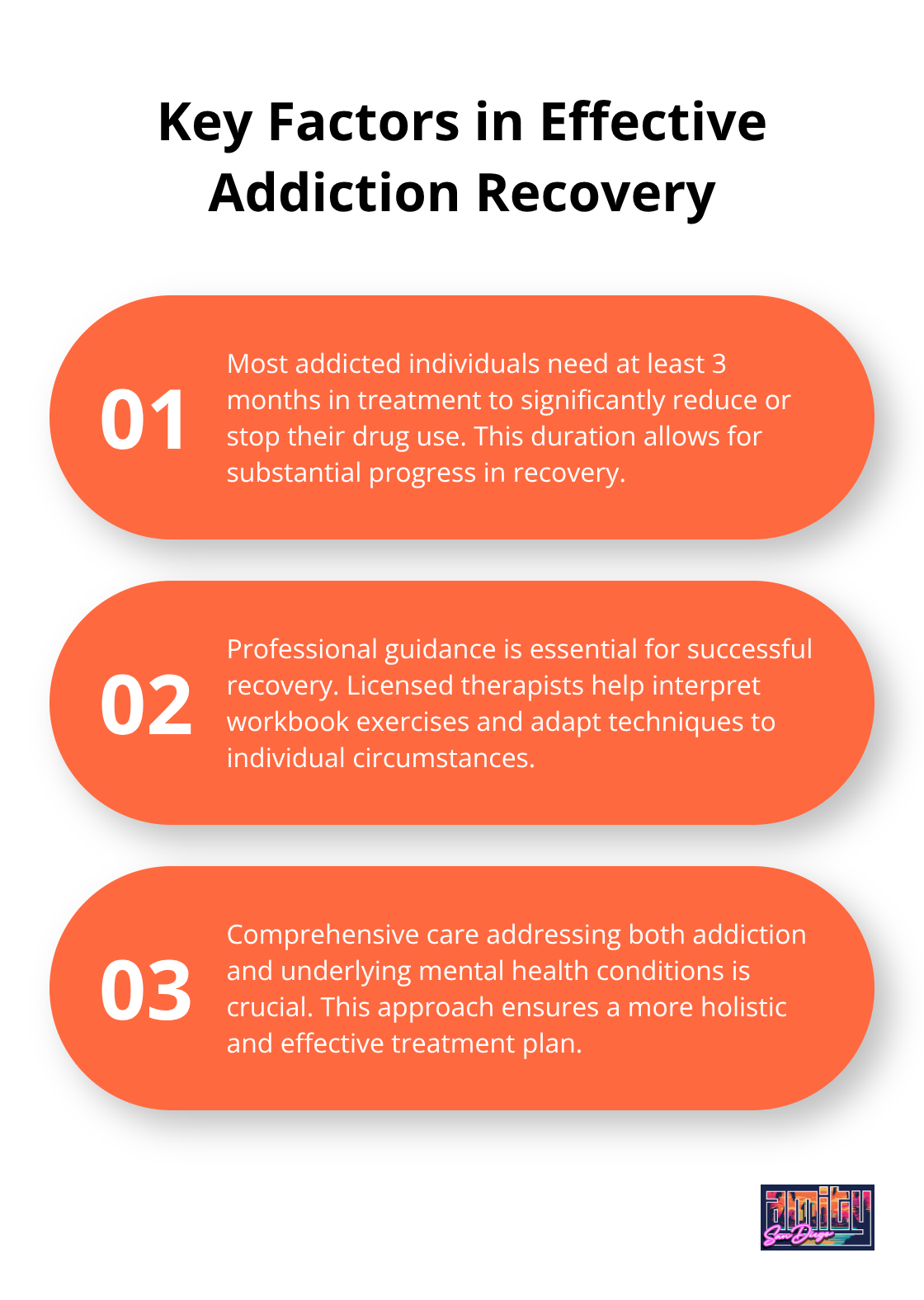
Medical databases including PubMed Central and the National Institute on Drug Abuse repository contain research-backed recovery workbooks available as free PDFs. Research indicates that most addicted individuals need at least 3 months in treatment to significantly reduce or stop their drug use.
Public library systems across San Diego County provide digital access to recovery resources through platforms like OverDrive and Hoopla (requiring only a library card for unlimited downloads). Professional associations such as the American Psychological Association maintain member-accessible databases with evidence-based recovery materials, though non-member access may require institutional affiliation.
Once you locate potential workbooks from these trusted sources, the next step involves evaluating their quality and clinical credibility to make informed choices for your recovery journey. For those seeking comprehensive addiction treatment San Diego offers numerous resources and professional support options.
Evaluating Recovery Workbook Quality and Credibility
Evidence-Based Content Separates Quality from Marketing
Quality recovery workbooks build their foundation on peer-reviewed research and proven clinical methods. The Addiction Recovery Skills Workbook by Suzette Glasner-Edwards uses cognitive behavioral therapy techniques that support substance use reduction when professionals implement them correctly. Effective workbooks cite specific studies from the National Institute on Drug Abuse or reference publications in journals like the Journal of Substance Abuse Treatment. Materials that make broad claims without scientific references or promote unproven methods like rapid detox should raise immediate red flags.
Author Credentials Outweigh Flashy Presentations
Suzette Glasner-Edwards holds a PhD and works as a clinical researcher at UCLA, which gives her workbook the credibility that generic self-help authors cannot match. Legitimate recovery workbooks come from licensed clinical psychologists, addiction medicine specialists, or certified addiction counselors with at least 10 years of treatment experience. Author bios should list board certifications, university affiliations, and published research (not just testimonials or media appearances). Authors with only life coaching certificates, those who promote their own treatment centers exclusively, or writers without verifiable clinical backgrounds present serious concerns.

Professional Endorsements Provide Real-World Validation
Treatment centers stake their reputations on the materials they recommend to clients in active recovery. The Substance Abuse and Mental Health Services Administration maintains a database of workbooks that accredited facilities use, with over 200 vetted options available for review. Joint Commission-accredited facilities and programs certified by state health departments provide the most reliable endorsements. User reviews on clinical websites carry more weight than Amazon ratings because treatment professionals evaluate effectiveness based on client outcomes rather than general satisfaction scores.
These quality indicators help you identify workbooks that will support your recovery goals rather than waste valuable time and energy. For comprehensive support, consider exploring addiction treatment San Diego options. The next step involves learning how to integrate these materials effectively into your treatment plan.
Using Recovery Skills Workbooks Effectively
Recovery skills workbooks produce measurable results when treatment professionals integrate them into structured care plans rather than use them as standalone resources. Licensed therapists at accredited facilities report higher completion rates when clients use workbooks alongside weekly therapy sessions compared to self-directed approaches. The most effective integration occurs during intensive outpatient programs where counselors assign specific workbook exercises between sessions and review completed work during appointments. Treatment centers that incorporate workbooks into group therapy settings see participants complete exercises at improved rates according to Substance Abuse and Mental Health Services Administration data.
Professional Integration Maximizes Treatment Outcomes
Clinical teams achieve the best results when they weave workbook exercises directly into treatment protocols. Therapists assign specific chapters that align with current therapy goals and review completed exercises during sessions to reinforce learning. Group facilitators use workbook prompts to guide discussions and help participants share experiences with coping strategies. This professional oversight prevents clients from skipping difficult sections or misinterpreting therapeutic concepts that require clinical guidance.
Daily Practice Structure Beats Random Efforts
Successful workbook implementation requires consistent daily engagement rather than weekend marathon sessions that lead to burnout and abandonment. Clinical studies show that 15-20 minute daily sessions produce better outcomes than longer, infrequent practice periods. Set specific times each day for workbook exercises, preferably during your most alert hours when cognitive function peaks. Track completion with simple checkmarks on a calendar rather than elaborate progress journals that become overwhelming. The Addiction Recovery Skills Workbook includes 234 pages of material that overwhelms most users when approached without structure, but becomes manageable with daily 20-minute commitments spread across 8-10 weeks.
Measurable Progress Tracking Drives Success
Effective progress measurement focuses on specific behavioral changes rather than subjective feelings about recovery. Count days without substance use, frequency of coping skill application during triggers, and completion percentages of assigned exercises. Weekly self-assessments with standardized scales like the Beck Depression Inventory provide objective data about mood improvements. Document specific situations where you successfully applied workbook techniques, noting the trigger, technique used, and outcome achieved. Treatment professionals recommend tracking at least three measurable goals simultaneously to maintain motivation and identify which strategies work best for your specific situation.

Learning to practice healthy coping mechanisms becomes essential for maintaining long-term recovery success.
Final Thoughts
Quality recovery workbooks provide structured support that complements professional treatment rather than replaces it. The Addiction Recovery Skills Workbook free PDF and similar evidence-based materials offer proven techniques when professionals oversee their use correctly. Their effectiveness depends on proper implementation and clinical oversight rather than self-directed attempts.
Professional guidance remains the cornerstone of successful addiction recovery. Licensed therapists help interpret workbook exercises, address complex emotional responses, and adapt techniques to individual circumstances. Self-directed workbook use often leads to incomplete understanding or abandonment when challenging material surfaces without professional support (particularly during early recovery phases).
Recovery requires comprehensive care that addresses both addiction and underlying mental health conditions. We at Amity San Diego combine evidence-based outpatient treatment with personalized support through our treatment programs. Our clinical team integrates therapeutic workbooks into structured treatment plans while providing the professional guidance necessary for lasting addiction treatment San Diego recovery success.