Gambling addiction affects millions of Americans, with studies showing that 2-3% of adults struggle with problem gambling behaviors. Many people don’t realize that gambling addiction treatment medication can be an effective part of recovery.
At Amity San Diego, we understand that finding the right medication and treatment approach requires professional guidance. This guide will help you navigate your options and connect with qualified providers.
What Medication Options Exist for Gambling Addiction
Currently, no FDA-approved medications specifically target gambling disorder, but healthcare providers routinely prescribe several off-label options that show strong effectiveness. Research demonstrates that these medications address the neurochemical imbalances that fuel compulsive behaviors.
Opioid Antagonists Lead Treatment Options
Naltrexone stands out as the most effective medication option available. This medication blocks dopamine pathways in the brain’s reward system and reduces the intense urges that drive compulsive behavior.
N-acetyl cysteine represents another breakthrough treatment. This glutamate-modulating agent demonstrates potential for use in behavioral addictions and compulsive behaviors, particularly in gambling disorder. The medication works by regulating brain regions that control impulse decisions and compulsive actions.
Antidepressants Show Mixed Results
Selective serotonin reuptake inhibitors like paroxetine and fluvoxamine produce varied outcomes in clinical studies. Some patients experience significant improvement while others show minimal response compared to placebo groups. These medications target serotonin imbalances that often contribute to addictive behaviors.

Healthcare providers frequently prescribe these antidepressants when patients also struggle with depression or anxiety disorders. Studies show a high rate of comorbidity between gambling disorder and substance use disorders, mood and anxiety disorders. The dual approach addresses both conditions simultaneously.
Mood Stabilizers Target Co-occurring Conditions
Lithium shows particular promise for patients with co-occurring bipolar disorder. This medication stabilizes mood swings while reducing gambling compulsions through its effects on neurotransmitter systems. Valproate and topiramate, traditionally seizure medications, also reduce gambling urges through different neurochemical pathways.
These mood stabilizers work especially well when healthcare providers combine them with cognitive behavioral therapy. The combination approach targets both the biological and psychological aspects of addiction.
Now that you understand the medication landscape, the next step involves finding qualified healthcare professionals who can prescribe and monitor these treatments effectively. For comprehensive addiction treatment San Diego residents can access specialized care programs.
How Do You Find the Right Treatment Provider
Healthcare professionals qualified to prescribe gambling addiction medications require targeted research and specific questions. Most primary care physicians lack specialized training in addiction medicine, which makes it essential to seek providers with demonstrated experience in behavioral addictions.
Psychiatrists who specialize in addiction medicine offer the most comprehensive care. Licensed addiction counselors with prescriptive authority and physicians affiliated with major medical centers also provide excellent treatment options. The American Society of Addiction Medicine maintains a provider directory that helps locate certified specialists in your area.
Academic medical centers often house gambling disorder research programs. These facilities connect you with providers who use the latest evidence-based treatments and stay current with emerging medication protocols.
Research Provider Credentials and Experience
Ask potential providers about their specific experience with gambling disorder treatment. Request information about how many patients they currently manage with these conditions. Inquire about their familiarity with naltrexone, N-acetyl cysteine, and other medications discussed in research literature.
Providers should explain their treatment philosophy clearly. They should also describe whether they integrate medication with cognitive behavioral therapy. Request information about their success rates and typical treatment duration.
Verify that providers accept your insurance plan. Make sure they understand coverage limitations for gambling disorder treatment, as some insurers classify it differently than substance use disorders.

Navigate Insurance Coverage Requirements
Insurance coverage for gambling disorder treatment varies significantly between providers and plans. Many insurers cover psychiatric consultations and medication management but may limit coverage for specialized gambling addiction services.
Contact your insurance company directly to understand your mental health benefits. Ask about any prior authorization requirements that may apply to your treatment plan.
Treatment costs typically range from $200-400 per month for medication management visits. Naltrexone costs approximately $50-150 monthly depending on your pharmacy benefits.
Prepare Questions for Initial Consultations
Effective providers should discuss multiple treatment approaches during your first meeting. They should explain how medications work alongside therapy and support groups. Ask about their experience with treatment-resistant cases and their approach to medication adjustments.
Request details about their monitoring protocols for side effects. Providers should also explain their communication style and availability between appointments.
These preparation steps position you to make informed decisions about your treatment team. The next component involves understanding how medications work alongside other proven treatment approaches that address the psychological and social aspects of gambling addiction. For comprehensive addiction treatment San Diego residents can access specialized care programs.
What Treatment Options Work Beyond Medication
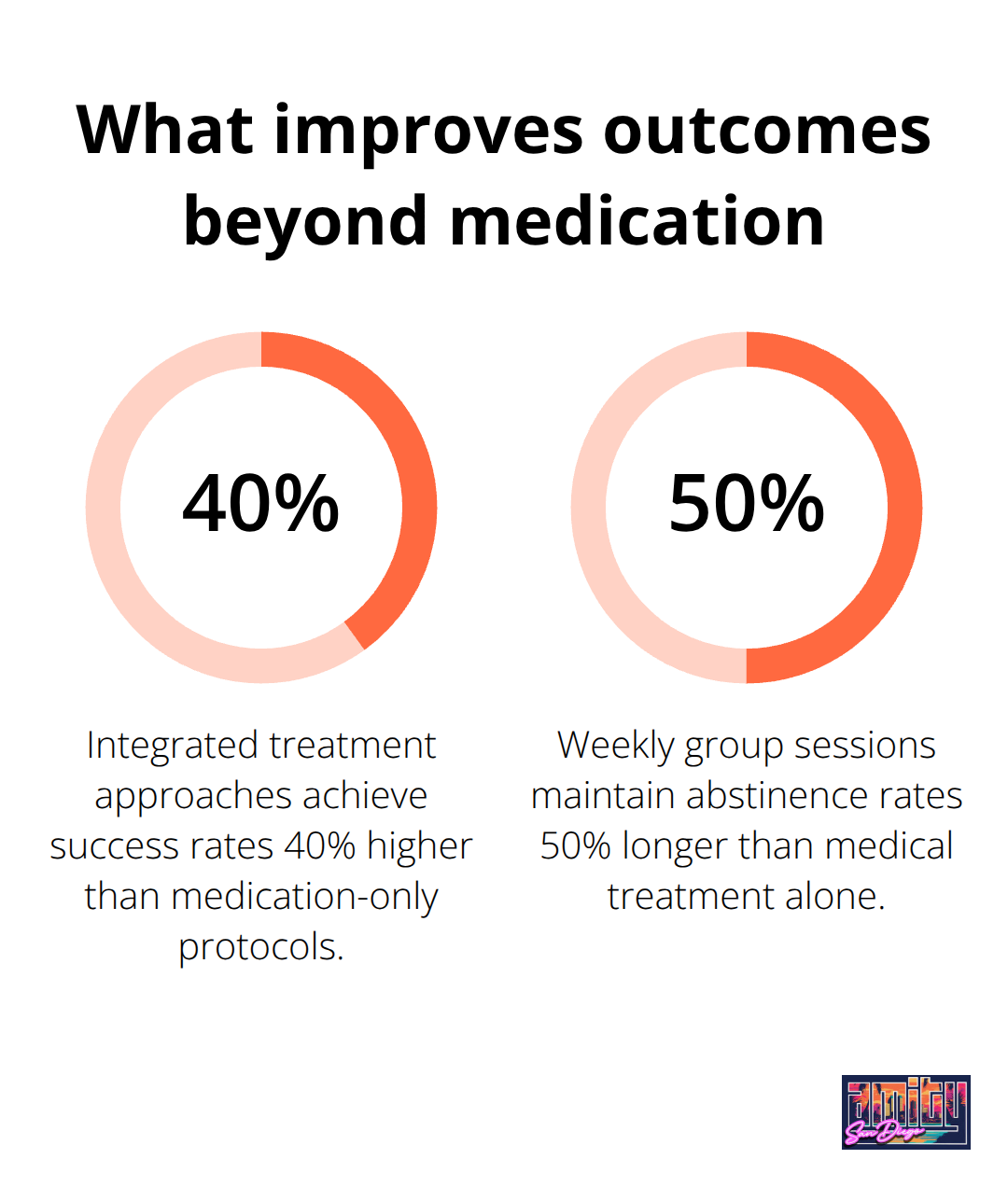
Medication alone rarely produces lasting recovery from gambling addiction. Research from the American Society of Addiction Medicine shows that integrated treatment approaches achieve success rates 40% higher than medication-only protocols.
Cognitive Behavioral Therapy Leads Evidence-Based Treatment
Cognitive behavioral therapy stands as the gold standard for gambling disorder treatment. CBTs show promise for reducing gambling disorder severity and gambling behavior when combined with medication management. CBT targets the cognitive distortions that fuel compulsive behaviors and teaches patients to recognize triggers while they develop alternative responses.
Therapists help patients challenge beliefs about luck, control, and probability that drive compulsive urges. The therapy also addresses financial management skills and relapse prevention strategies that medication cannot provide. Patients learn to identify high-risk situations and practice coping mechanisms before they encounter real-world triggers.
Specialized Therapy Approaches Produce Rapid Results
Motivational enhancement therapy produces significant behavior changes within six sessions (according to research published in the Journal of Gambling Studies). This approach increases patient motivation to change while it builds confidence in recovery abilities.
Exposure therapy gradually reduces the emotional intensity of triggers through controlled exposure to environments that previously triggered compulsive behaviors. Dialectical behavior therapy teaches distress tolerance skills that help patients manage urges without they act on them.
Group Support Programs Provide Peer Accountability
Group therapy sessions provide accountability and peer support that individual medication management lacks. The National Council on Problem Gambling reports that patients who participate in weekly group sessions maintain abstinence rates 50% longer than those who receive only medical treatment.
Gamblers Anonymous meetings occur in most major cities and provide free peer support through a 12-step framework similar to Alcoholics Anonymous. The National Problem Gambling Helpline at 1-800-522-4700 connects callers with local GA meetings and treatment resources 24 hours daily.
Comprehensive Programs Address Financial Recovery
Intensive outpatient programs combine medication management, individual therapy, group counseling, and family education components. These programs typically require 9-12 hours of treatment weekly for 8-12 weeks and address multiple aspects of recovery simultaneously.
Financial counseling addresses the debt management and budgeting skills that addiction destroys. Many patients accumulate significant debts, which makes financial recovery essential for long-term success. For comprehensive addiction treatment San Diego residents can access specialized programs that address both gambling disorders and co-occurring substance use issues.
Final Thoughts
Gambling addiction treatment medication provides hope for millions who struggle with compulsive behaviors. Naltrexone and N-acetyl cysteine show the strongest research support, while antidepressants and mood stabilizers help patients with co-occurring conditions. These medications work best when healthcare providers combine them with cognitive behavioral therapy and peer support programs.
Professional guidance remains essential for selecting the right treatment approach. Healthcare providers who specialize in addiction medicine can evaluate your specific needs and monitor medication effectiveness (they also coordinate care between different treatment modalities to maximize your recovery potential). These specialists understand how different medications interact with therapy approaches and can adjust treatment plans based on your progress.
Recovery starts when you take action today. Contact qualified providers, verify your insurance coverage, and explore comprehensive treatment options. We at Amity San Diego provide evidence-based outpatient programs that integrate medication management with personalized therapy approaches for addiction treatment San Diego residents who need comprehensive care.