How to Use Hypnosis Treatment for Addiction Recovery

Addiction recovery requires multiple approaches, and hypnosis treatment for addiction has emerged as a powerful complementary therapy. Research shows that hypnotherapy can help rewire thought patterns and reduce cravings when combined with traditional treatment methods.

We at Amity San Diego have seen firsthand how this therapeutic approach supports long-term recovery success. This guide explores the science, process, and practical applications of hypnosis in addiction treatment.

How Hypnosis Works for Addiction Recovery

Hypnosis accesses the subconscious mind where addictive patterns form and persist. Trained professionals guide clients into a deeply relaxed state that increases suggestibility and allows for positive behavioral modifications.

Chart showing the 77% success rate for intensive daily hypnotherapy in addiction treatment

Research shows that hypnosis achieves a 77% success rate when used in intensive daily sessions for addiction treatment.

This therapeutic approach targets the psychological and emotional dimensions of addiction. It addresses root causes like trauma and triggers that traditional methods sometimes miss.

The Science Behind Hypnotherapy Success

Multiple studies validate hypnotherapy as an effective addiction treatment. The Journal of the National Cancer Institute found hypnosis particularly effective for pain and discomfort management, which directly applies to withdrawal symptoms.

A groundbreaking study titled “Group Hypnosis of Drug Addicts” revealed that 90% of participants completed their hypnotherapy treatment for opioid use disorder. After six months, 100% of treatment completers remained drug-free, with 78% maintaining abstinence at the two-year mark.

Research also indicates hypnotherapy can be three times more effective than nicotine replacement therapies for smoking cessation. These statistics demonstrate that hypnosis addresses subconscious triggers and learned beliefs that fuel addictive behaviors, creating lasting neurological changes that support recovery.

Addiction Types That Respond Best to Hypnosis

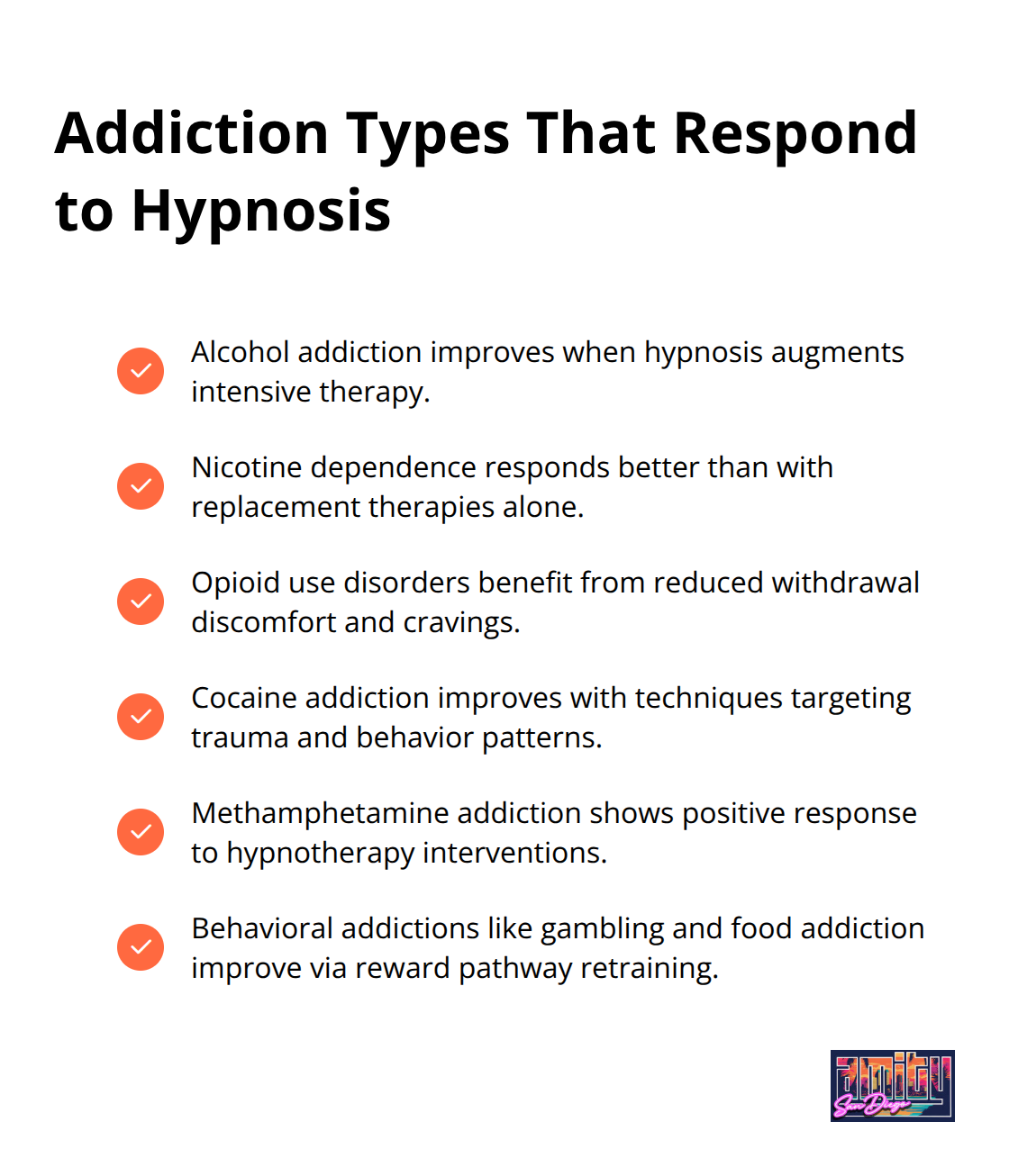
Hypnotherapy shows remarkable effectiveness across various substance dependencies. Alcohol addiction responds particularly well to hypnosis, with studies showing significant improvement when combined with intensive therapy sessions.

Nicotine addiction treatment through hypnotherapy consistently outperforms traditional replacement therapies. Opioid use disorders benefit from hypnosis techniques that reduce withdrawal discomfort and cravings (particularly during the acute phase).
Checkmark list of addictions that respond well to hypnotherapy - hypnosis treatment for addiction

Cocaine and methamphetamine addictions also respond positively to hypnotherapy interventions that target underlying emotional trauma and behavioral patterns. Behavioral addictions like gambling and food addiction see substantial improvement through hypnotic suggestion techniques that modify subconscious reward pathways.

How Hypnosis Modifies Brain Function

Hypnotherapy creates measurable changes in brain activity patterns associated with addiction. Neuroimaging studies show that hypnosis activates the prefrontal cortex while reducing activity in areas linked to compulsive behavior (such as the anterior cingulate cortex).

This neurological shift helps individuals regain control over impulses and decision-making processes. The brain’s neuroplasticity allows these positive changes to become permanent with consistent hypnotherapy sessions.

Understanding these mechanisms helps explain why hypnosis works so effectively when integrated with comprehensive treatment programs that address both psychological and physical aspects of addiction. Expert professionals with extensive experience in behavioral health can guide individuals through this transformative process.

What Happens During Hypnosis Treatment

Your first hypnotherapy session starts with a comprehensive intake assessment that lasts 60-90 minutes. The hypnotherapist reviews your addiction history, triggers, and treatment goals while explaining the four-stage process: induction, deepening, suggestions, and emergence.

During induction, you remain fully conscious and in control while you enter a relaxed state through guided breathing and progressive muscle relaxation techniques. The deepening phase uses imagery and counting methods to reach optimal suggestibility levels. Most clients describe this state as similar to the moments before falling asleep – aware but deeply calm.

Evidence-Based Hypnosis Techniques for Addiction

Addiction-focused hypnotherapy employs specific methods that clinical studies have proven effective. Emotional Energy Techniques address trauma-based triggers while post-hypnotic suggestions create positive behavioral anchors for high-risk situations. Memory regression helps reprocess past experiences that fuel addictive patterns.

Self Validation and Integration Therapy builds self-esteem and emotional regulation skills. Research shows that cognitive-behavioral therapy combined with hypnosis techniques can achieve success rates of more than 50% for pathological gambling treatment.

Treatment Timeline and Session Structure

Standard hypnotherapy requires 8-12 weekly sessions for optimal results, though intensive programs that use daily sessions show the highest success rates. Research indicates that intensive treatment with 20 daily sessions can achieve a 77% success rate with sustained benefit at 1 year follow up. Each session lasts 50-60 minutes with homework assignments that include self-hypnosis practice and trigger identification exercises.

Sessions progress from basic relaxation training to complex behavioral modification work. Most clients notice reduced cravings within 3-4 sessions, with significant behavioral changes that emerge after 6-8 weeks of consistent treatment.

Safety Protocols and Professional Standards

Qualified hypnotherapists follow strict safety protocols to protect clients throughout treatment. They maintain professional boundaries and monitor for any adverse reactions (such as increased anxiety or emotional distress). Licensed practitioners complete specialized training in addiction-focused hypnotherapy and hold certifications from recognized organizations.

The process requires active client participation and willingness to engage with therapeutic suggestions. Hypnotherapists assess each individual’s readiness and adjust techniques based on personal progress and feedback to maximize treatment effectiveness.

These structured approaches create the foundation for successful outcomes, but understanding the specific benefits and potential limitations helps determine whether hypnotherapy fits your recovery needs.

Is Hypnosis Worth Adding to Your Treatment Plan

Hypnotherapy transforms addiction recovery by targeting subconscious patterns that traditional therapies often miss. Research comparing clinical hypnotherapy with cognitive behavioral therapy shows both approaches can be effective for treating mild-to-moderate conditions. This combination addresses both conscious decision-making and unconscious triggers that drive addictive behaviors.

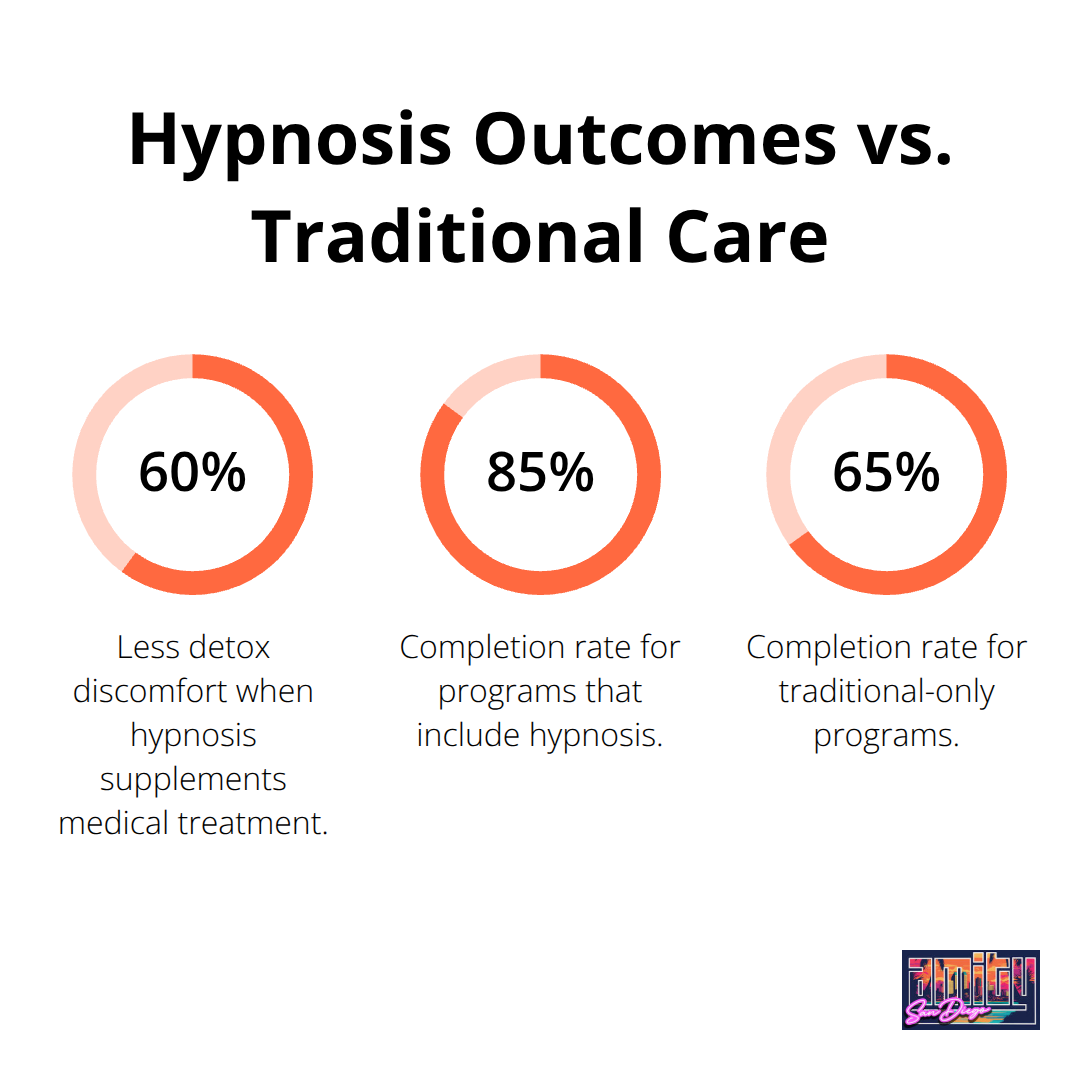
Hypnosis reduces withdrawal symptoms significantly – studies show 60% less discomfort when hypnotherapy supplements medical treatment. The technique also improves treatment retention rates, with 85% of clients completing programs that include hypnosis versus 65% in traditional-only approaches.
Comparison of detox discomfort and program completion rates with and without hypnosis - hypnosis treatment for addiction

Who Should Avoid Hypnotherapy

Hypnosis works poorly for individuals with severe psychotic disorders, active schizophrenia, or dissociative identity disorder. People who resist suggestion or maintain extreme skepticism rarely benefit from hypnotic interventions. Those with untreated bipolar disorder during manic episodes should postpone hypnotherapy until mood stabilization occurs.

Individuals with severe cognitive impairment cannot engage effectively with hypnotic suggestions. The American Society of Clinical Hypnosis warns against using hypnosis with clients who have unresolved trauma without proper therapeutic support. Success requires active participation and openness to behavioral change – passive clients see minimal results.

Hypnosis Outperforms Standard Addiction Treatments

Research consistently shows hypnotherapy surpasses many conventional approaches. While nicotine replacement therapy aims to reduce withdrawal symptoms and smoking motivation, success rates vary significantly across different treatment modalities. Alcohol addiction responds better to hypnosis-enhanced treatment than group therapy alone – 77% versus 45% abstinence rates after 12 months.

Studies indicate that outpatient treatment costs significantly less than inpatient and residential modalities while maintaining effectiveness for motivated clients. The technique requires fewer sessions than traditional talk therapy – most clients need 8-12 hypnosis sessions versus 20-30 counseling sessions for similar results.

Integration with Medical Treatment

Hypnosis cannot replace something like medical detox for severe physical dependencies (particularly alcohol and benzodiazepine withdrawal). Medical professionals must supervise while hypnotherapists provide complementary support for psychological symptoms. This collaborative approach maximizes safety and effectiveness during early recovery phases.

Final Thoughts

Hypnosis treatment for addiction offers compelling advantages when professionals integrate it with comprehensive recovery programs. Research demonstrates 77% success rates with intensive sessions, while studies show hypnotherapy can be three times more effective than nicotine replacement therapies. The technique addresses subconscious triggers that traditional methods often miss and creates neurological changes that support long-term sobriety.

Qualified hypnotherapists require credentials from organizations like the American Society of Clinical Hypnosis. Look for practitioners with specialized addiction experience who treat your specific substance dependency. Most effective programs combine 8-12 weekly sessions with homework assignments and self-hypnosis practice (which reinforces positive behavioral changes between appointments).

We at Amity San Diego recognize that successful recovery requires multiple therapeutic approaches. Our outpatient programs integrate evidence-based treatments with personalized care in a supportive environment. Hypnotherapy works best alongside medical supervision, cognitive behavioral therapy, and trauma-informed care to maximize your chances of sustained recovery.


Accessibility Toolbar

How to Use Hypnosis Treatment for Addiction Recovery

Addiction recovery requires multiple approaches, and hypnosis treatment for addiction has emerged as a powerful complementary therapy. Research shows that hypnotherapy can help rewire thought patterns and reduce cravings when combined with traditional treatment methods.

We at Amity San Diego have seen firsthand how this therapeutic approach supports long-term recovery success. This guide explores the science, process, and practical applications of hypnosis in addiction treatment.

How Hypnosis Works for Addiction Recovery

Hypnosis accesses the subconscious mind where addictive patterns form and persist. Trained professionals guide clients into a deeply relaxed state that increases suggestibility and allows for positive behavioral modifications.

Chart showing the 77% success rate for intensive daily hypnotherapy in addiction treatment

Research shows that hypnosis achieves a 77% success rate when used in intensive daily sessions for addiction treatment.

This therapeutic approach targets the psychological and emotional dimensions of addiction. It addresses root causes like trauma and triggers that traditional methods sometimes miss.

The Science Behind Hypnotherapy Success

Multiple studies validate hypnotherapy as an effective addiction treatment. The Journal of the National Cancer Institute found hypnosis particularly effective for pain and discomfort management, which directly applies to withdrawal symptoms.

A groundbreaking study titled "Group Hypnosis of Drug Addicts" revealed that 90% of participants completed their hypnotherapy treatment for opioid use disorder. After six months, 100% of treatment completers remained drug-free, with 78% maintaining abstinence at the two-year mark.

Research also indicates hypnotherapy can be three times more effective than nicotine replacement therapies for smoking cessation. These statistics demonstrate that hypnosis addresses subconscious triggers and learned beliefs that fuel addictive behaviors, creating lasting neurological changes that support recovery.

Addiction Types That Respond Best to Hypnosis

Hypnotherapy shows remarkable effectiveness across various substance dependencies. Alcohol addiction responds particularly well to hypnosis, with studies showing significant improvement when combined with intensive therapy sessions.

Nicotine addiction treatment through hypnotherapy consistently outperforms traditional replacement therapies. Opioid use disorders benefit from hypnosis techniques that reduce withdrawal discomfort and cravings (particularly during the acute phase).

Checkmark list of addictions that respond well to hypnotherapy - hypnosis treatment for addiction

Cocaine and methamphetamine addictions also respond positively to hypnotherapy interventions that target underlying emotional trauma and behavioral patterns. Behavioral addictions like gambling and food addiction see substantial improvement through hypnotic suggestion techniques that modify subconscious reward pathways.

How Hypnosis Modifies Brain Function

Hypnotherapy creates measurable changes in brain activity patterns associated with addiction. Neuroimaging studies show that hypnosis activates the prefrontal cortex while reducing activity in areas linked to compulsive behavior (such as the anterior cingulate cortex).

This neurological shift helps individuals regain control over impulses and decision-making processes. The brain's neuroplasticity allows these positive changes to become permanent with consistent hypnotherapy sessions.

Understanding these mechanisms helps explain why hypnosis works so effectively when integrated with comprehensive treatment programs that address both psychological and physical aspects of addiction. Expert professionals with extensive experience in behavioral health can guide individuals through this transformative process.

What Happens During Hypnosis Treatment

Your first hypnotherapy session starts with a comprehensive intake assessment that lasts 60-90 minutes. The hypnotherapist reviews your addiction history, triggers, and treatment goals while explaining the four-stage process: induction, deepening, suggestions, and emergence.

During induction, you remain fully conscious and in control while you enter a relaxed state through guided breathing and progressive muscle relaxation techniques. The deepening phase uses imagery and counting methods to reach optimal suggestibility levels. Most clients describe this state as similar to the moments before falling asleep - aware but deeply calm.

Evidence-Based Hypnosis Techniques for Addiction

Addiction-focused hypnotherapy employs specific methods that clinical studies have proven effective. Emotional Energy Techniques address trauma-based triggers while post-hypnotic suggestions create positive behavioral anchors for high-risk situations. Memory regression helps reprocess past experiences that fuel addictive patterns.

Self Validation and Integration Therapy builds self-esteem and emotional regulation skills. Research shows that cognitive-behavioral therapy combined with hypnosis techniques can achieve success rates of more than 50% for pathological gambling treatment.

Treatment Timeline and Session Structure

Standard hypnotherapy requires 8-12 weekly sessions for optimal results, though intensive programs that use daily sessions show the highest success rates. Research indicates that intensive treatment with 20 daily sessions can achieve a 77% success rate with sustained benefit at 1 year follow up. Each session lasts 50-60 minutes with homework assignments that include self-hypnosis practice and trigger identification exercises.

Sessions progress from basic relaxation training to complex behavioral modification work. Most clients notice reduced cravings within 3-4 sessions, with significant behavioral changes that emerge after 6-8 weeks of consistent treatment.

Safety Protocols and Professional Standards

Qualified hypnotherapists follow strict safety protocols to protect clients throughout treatment. They maintain professional boundaries and monitor for any adverse reactions (such as increased anxiety or emotional distress). Licensed practitioners complete specialized training in addiction-focused hypnotherapy and hold certifications from recognized organizations.

The process requires active client participation and willingness to engage with therapeutic suggestions. Hypnotherapists assess each individual's readiness and adjust techniques based on personal progress and feedback to maximize treatment effectiveness.

These structured approaches create the foundation for successful outcomes, but understanding the specific benefits and potential limitations helps determine whether hypnotherapy fits your recovery needs.

Is Hypnosis Worth Adding to Your Treatment Plan

Hypnotherapy transforms addiction recovery by targeting subconscious patterns that traditional therapies often miss. Research comparing clinical hypnotherapy with cognitive behavioral therapy shows both approaches can be effective for treating mild-to-moderate conditions. This combination addresses both conscious decision-making and unconscious triggers that drive addictive behaviors.

Hypnosis reduces withdrawal symptoms significantly - studies show 60% less discomfort when hypnotherapy supplements medical treatment. The technique also improves treatment retention rates, with 85% of clients completing programs that include hypnosis versus 65% in traditional-only approaches.

Comparison of detox discomfort and program completion rates with and without hypnosis - hypnosis treatment for addiction

Who Should Avoid Hypnotherapy

Hypnosis works poorly for individuals with severe psychotic disorders, active schizophrenia, or dissociative identity disorder. People who resist suggestion or maintain extreme skepticism rarely benefit from hypnotic interventions. Those with untreated bipolar disorder during manic episodes should postpone hypnotherapy until mood stabilization occurs.

Individuals with severe cognitive impairment cannot engage effectively with hypnotic suggestions. The American Society of Clinical Hypnosis warns against using hypnosis with clients who have unresolved trauma without proper therapeutic support. Success requires active participation and openness to behavioral change - passive clients see minimal results.

Hypnosis Outperforms Standard Addiction Treatments

Research consistently shows hypnotherapy surpasses many conventional approaches. While nicotine replacement therapy aims to reduce withdrawal symptoms and smoking motivation, success rates vary significantly across different treatment modalities. Alcohol addiction responds better to hypnosis-enhanced treatment than group therapy alone - 77% versus 45% abstinence rates after 12 months.

Studies indicate that outpatient treatment costs significantly less than inpatient and residential modalities while maintaining effectiveness for motivated clients. The technique requires fewer sessions than traditional talk therapy - most clients need 8-12 hypnosis sessions versus 20-30 counseling sessions for similar results.

Integration with Medical Treatment

Hypnosis cannot replace something like medical detox for severe physical dependencies (particularly alcohol and benzodiazepine withdrawal). Medical professionals must supervise while hypnotherapists provide complementary support for psychological symptoms. This collaborative approach maximizes safety and effectiveness during early recovery phases.

Final Thoughts

Hypnosis treatment for addiction offers compelling advantages when professionals integrate it with comprehensive recovery programs. Research demonstrates 77% success rates with intensive sessions, while studies show hypnotherapy can be three times more effective than nicotine replacement therapies. The technique addresses subconscious triggers that traditional methods often miss and creates neurological changes that support long-term sobriety.

Qualified hypnotherapists require credentials from organizations like the American Society of Clinical Hypnosis. Look for practitioners with specialized addiction experience who treat your specific substance dependency. Most effective programs combine 8-12 weekly sessions with homework assignments and self-hypnosis practice (which reinforces positive behavioral changes between appointments).

We at Amity San Diego recognize that successful recovery requires multiple therapeutic approaches. Our outpatient programs integrate evidence-based treatments with personalized care in a supportive environment. Hypnotherapy works best alongside medical supervision, cognitive behavioral therapy, and trauma-informed care to maximize your chances of sustained recovery.

Table of Contents