BPD Treatment Programs: Finding the Right Approach

At Amity San Diego, we understand the challenges of living with Borderline Personality Disorder (BPD). This complex mental health condition affects millions of people worldwide, impacting their relationships, emotions, and daily functioning.

Treatment programs for Borderline Personality Disorder offer hope and support for those struggling with BPD. In this post, we’ll explore effective approaches to managing BPD and guide you through the process of finding the right treatment program.

What is Borderline Personality Disorder?

Understanding BPD

Borderline Personality Disorder (BPD) affects approximately 1.4% of the adult U.S. population. This complex mental health condition often co-occurs with substance use disorders, which complicates treatment but doesn’t make recovery impossible.
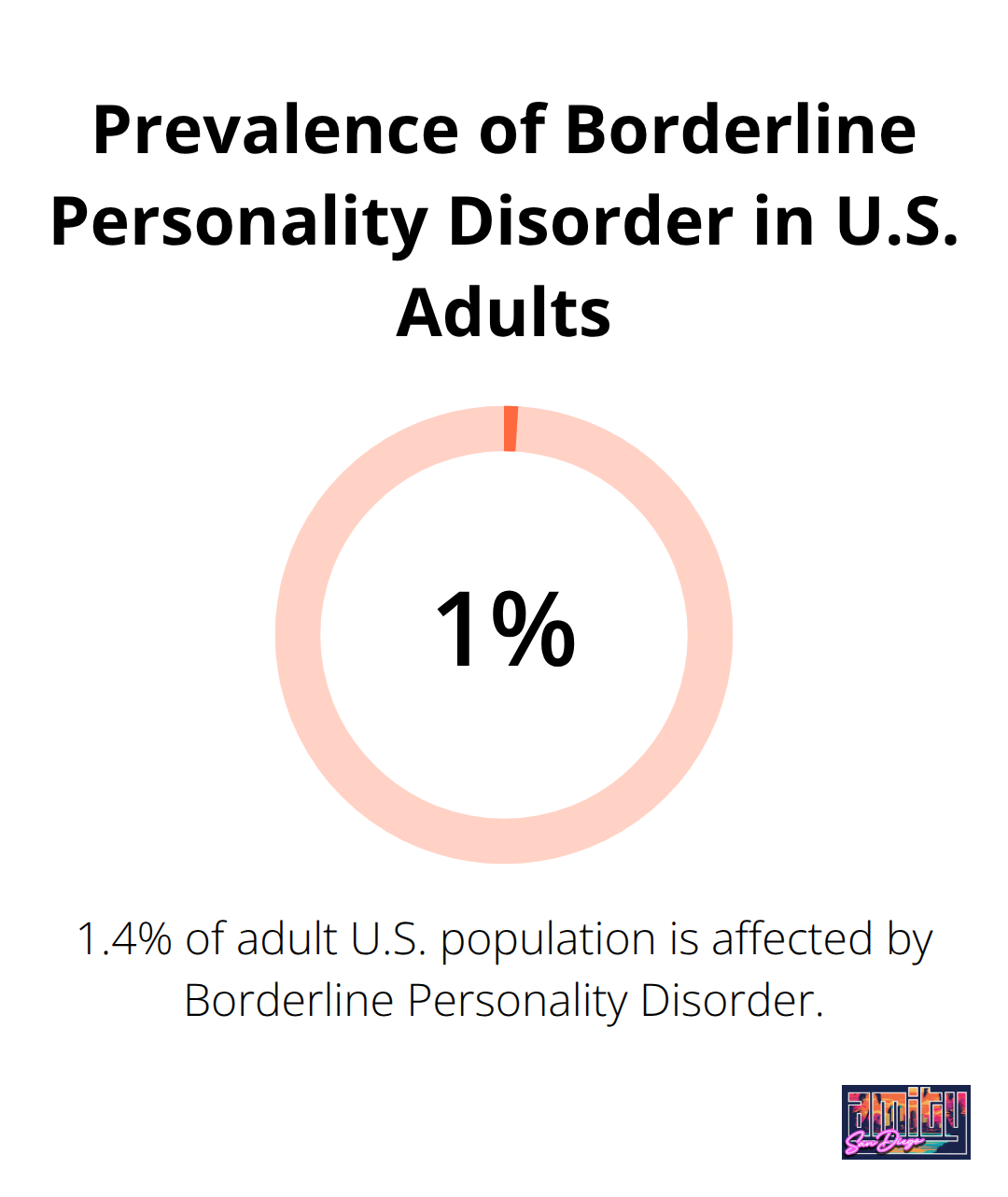
A percentage chart showing that 1.4% of adult U.S. population is affected by Borderline Personality Disorder - treatment programs for borderline personality disorder

Key Symptoms of BPD

BPD manifests as a pattern of instability in interpersonal relationships, self-image, and emotions. People with BPD typically experience:

  1. Intense fear of abandonment
  2. Unstable and intense relationships
  3. Rapidly shifting self-image
  4. Impulsive and potentially self-damaging behaviors
  5. Recurrent suicidal thoughts or self-harm
  6. Intense mood swings
  7. Chronic feelings of emptiness
  8. Inappropriate, intense anger
  9. Stress-related paranoid thoughts or dissociation

Debunking BPD Myths

Several misconceptions surround BPD, which can lead to stigma and delayed treatment. Let’s address some common myths:

  1. BPD doesn’t equal a “life sentence.” With proper treatment, many individuals with BPD experience significant symptom improvement.
  2. People with BPD don’t “seek attention.” Their behaviors often represent desperate attempts to manage overwhelming emotions.
  3. BPD doesn’t result solely from trauma. While trauma can contribute, BPD likely stems from a combination of genetic, environmental, and neurobiological factors.

BPD’s Impact on Daily Life

BPD presents significant challenges in daily life. Relationships often suffer due to intense emotional reactions and fear of abandonment. Work and education can face disruption from impulsivity and mood swings. The risk of substance abuse increases significantly in individuals with BPD, with studies showing up to 78% of adults with BPD develop a substance-related disorder in their lifetime.

The BPD-Addiction Connection

The link between BPD and addiction requires special attention. Many individuals with BPD turn to substances as a way to cope with intense emotions or fill a sense of emptiness. This self-medication often leads to a cycle of addiction that exacerbates BPD symptoms.

Integrated treatment approaches (like those offered at Amity San Diego) address both BPD and addiction simultaneously. This comprehensive care provides the best chance for lasting recovery. If you or someone you know struggles with BPD and substance use, effective treatment options exist. The path to recovery starts with understanding the disorder and seeking professional help.

As we move forward, let’s explore the various treatment programs available for individuals with BPD, and how to choose the right approach for your unique needs.

Effective BPD Treatment Approaches

At Amity San Diego, we’ve witnessed the transformative power of appropriate treatment for individuals with Borderline Personality Disorder (BPD). Let’s explore some of the most effective therapies for managing BPD symptoms and co-occurring substance use disorders.

Dialectical Behavior Therapy (DBT)

DBT stands as the gold standard for BPD treatment. This approach helps patients develop skills in four key areas: mindfulness, distress tolerance, emotion regulation, and interpersonal effectiveness. Studies have shown that both short-term DBT and standard DBT improved suicidality in BPD patients with small or moderate effect sizes, lasting up to 24 months.

Cognitive Behavioral Therapy (CBT)

CBT focuses on identifying and changing negative thought patterns and behaviors. This therapy proves particularly effective for managing the intense emotions and impulsivity associated with BPD. Research shows that CBT can reduce self-harm behaviors in individuals with BPD.

Mentalization-Based Treatment (MBT)

MBT helps individuals with BPD improve their ability to understand their own and others’ mental states. This approach has shown promising results, with systematic reviews indicating that MBT is an effective treatment for reducing borderline personality disorder symptom severity in patients.

Transference-Focused Psychotherapy (TFP)

TFP addresses the core identity diffusion in BPD. While less common than DBT or CBT, TFP has demonstrated effectiveness in reducing BPD symptoms and improving overall functioning.

Medication Management

While no medications are FDA-approved specifically for BPD, certain medications can help manage specific symptoms. Antidepressants, mood stabilizers, and anti-anxiety medications may be prescribed as part of a comprehensive treatment plan. It’s important to work closely with a psychiatrist to find the right medication regimen.

We at Amity San Diego offer a combination of these evidence-based therapies tailored to each individual’s needs. Our approach also integrates treatment for co-occurring substance use disorders, addressing the complex relationship between BPD and addiction.
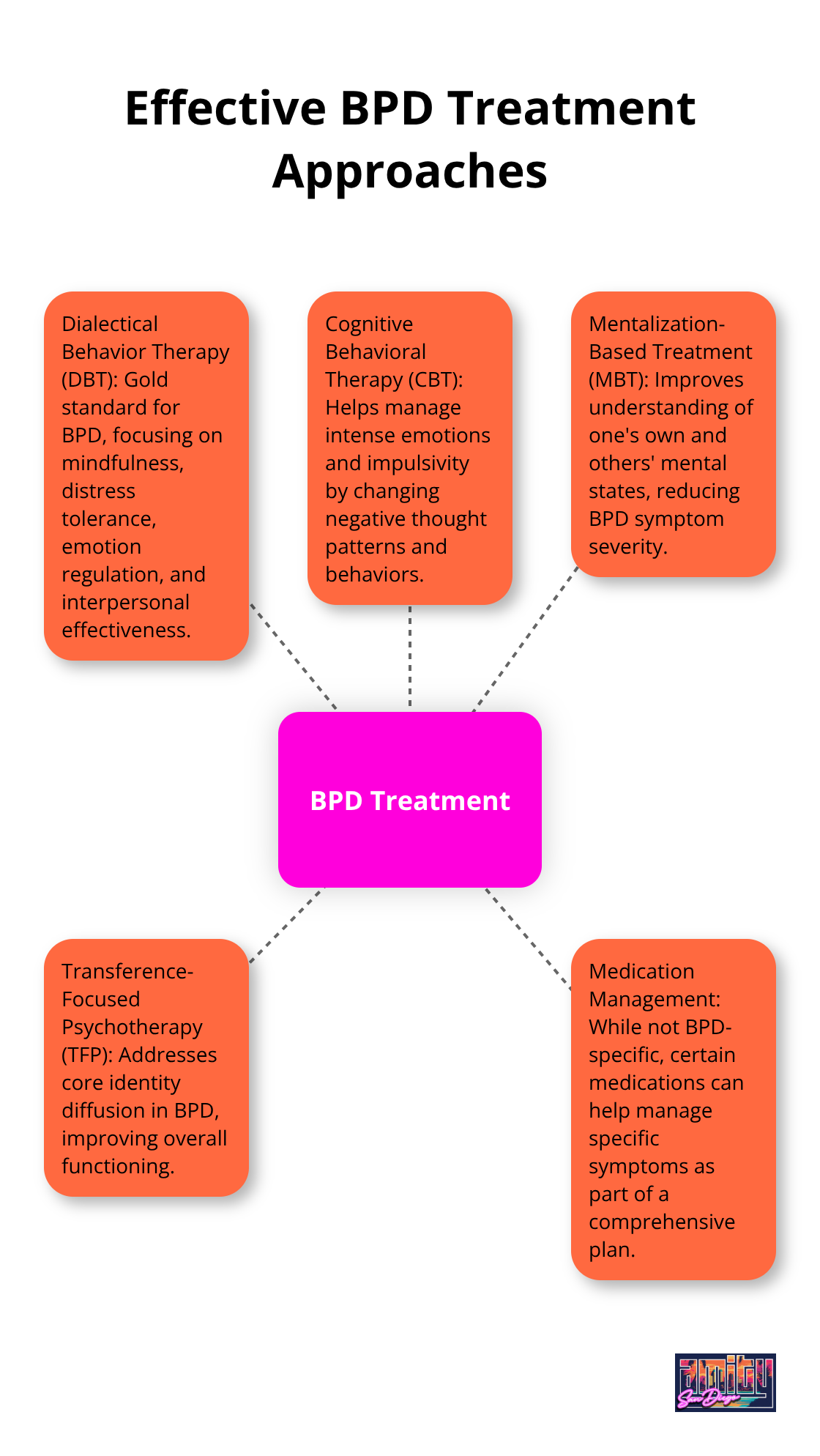
A hub and spoke chart showing various effective treatment approaches for Borderline Personality Disorder - treatment programs for borderline personality disorder

When selecting a treatment program, try to find one that offers a comprehensive approach. The most effective programs combine multiple therapeutic modalities and address both BPD and any co-occurring disorders (such as substance use disorders). Recovery is a journey, and finding the right treatment approach marks a significant first step.

Now that we’ve explored various treatment approaches, let’s discuss how to choose the right BPD treatment program for your unique needs.

Tailoring Your BPD Treatment Journey

Assess Your Individual Needs

Start with an evaluation of your specific symptoms, challenges, and goals. Do you struggle more with emotional regulation or interpersonal relationships? Is substance use a co-occurring issue? A thorough assessment by a mental health professional will provide valuable insights. The prevalence of borderline personality disorder was 1.4%, which highlights the importance of comprehensive evaluation.

Explore Treatment Modalities

Search for programs that offer evidence-based therapies like Dialectical Behavior Therapy (DBT) or Cognitive Behavioral Therapy (CBT). These approaches have shown significant effectiveness in managing BPD symptoms. A study evaluating the effectiveness of dialectical behaviour therapy (DBT) for borderline personality disorder (BPD) in an unselected, comorbid population found promising results.

Consider Program Structure

Decide whether an outpatient, intensive outpatient, or partial hospitalization program best fits your lifestyle and recovery needs. Outpatient programs offer flexibility, while more intensive options provide additional support and structure. The American Psychiatric Association recommends that a patient with borderline personality disorder have a documented, comprehensive, and person-centered treatment plan.

Evaluate Staff Expertise

Look for programs with clinicians specifically trained in BPD treatment. Ask about their experience and success rates with BPD patients. The quality of the therapeutic relationship significantly impacts treatment outcomes, so finding a team you trust is paramount.
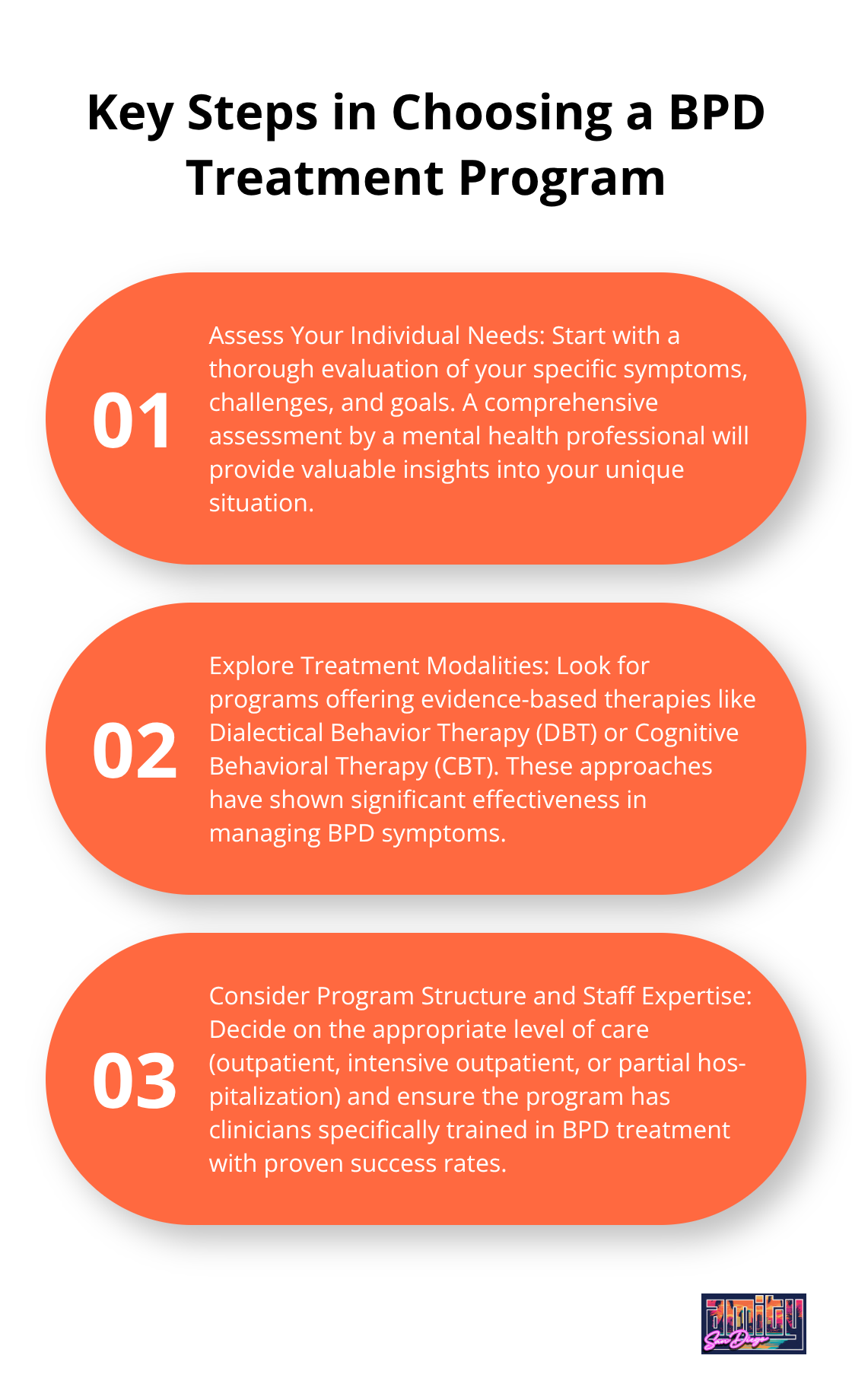
An ordered list chart showing three key steps in selecting a Borderline Personality Disorder treatment program

Address Co-Occurring Disorders

If you deal with both BPD and substance use issues, integrated treatment is essential. Facilities that specialize in dual diagnosis care (such as those offering addiction treatment in San Diego) are equipped to address the complex interplay between BPD and addiction. Research shows that integrated treatment leads to better outcomes than treating each condition separately.

Final Thoughts

Borderline Personality Disorder (BPD) presents unique challenges, but effective treatment options offer hope for recovery. Treatment programs for Borderline Personality Disorder should address both BPD symptoms and potential co-occurring substance use disorders. This personalized approach provides the best chance for lasting recovery.

Professional help plays a vital role in managing BPD. Amity San Diego offers personalized outpatient treatment programs that combine clinical excellence with compassionate care. Our team understands the complexities of BPD and provides the support needed to navigate the path to healing.

Living with BPD doesn’t define you. With the right treatment and support, you can develop skills to manage your symptoms, improve your relationships, and build a fulfilling life. Take that first step towards recovery today – reach out for help and embrace the possibility of positive change.


Accessibility Toolbar

BPD Treatment Programs: Finding the Right Approach

At Amity San Diego, we understand the challenges of living with Borderline Personality Disorder (BPD). This complex mental health condition affects millions of people worldwide, impacting their relationships, emotions, and daily functioning.

Treatment programs for Borderline Personality Disorder offer hope and support for those struggling with BPD. In this post, we'll explore effective approaches to managing BPD and guide you through the process of finding the right treatment program.

What is Borderline Personality Disorder?

Understanding BPD

Borderline Personality Disorder (BPD) affects approximately 1.4% of the adult U.S. population. This complex mental health condition often co-occurs with substance use disorders, which complicates treatment but doesn't make recovery impossible.

A percentage chart showing that 1.4% of adult U.S. population is affected by Borderline Personality Disorder - treatment programs for borderline personality disorder

Key Symptoms of BPD

BPD manifests as a pattern of instability in interpersonal relationships, self-image, and emotions. People with BPD typically experience:

  1. Intense fear of abandonment
  2. Unstable and intense relationships
  3. Rapidly shifting self-image
  4. Impulsive and potentially self-damaging behaviors
  5. Recurrent suicidal thoughts or self-harm
  6. Intense mood swings
  7. Chronic feelings of emptiness
  8. Inappropriate, intense anger
  9. Stress-related paranoid thoughts or dissociation

Debunking BPD Myths

Several misconceptions surround BPD, which can lead to stigma and delayed treatment. Let's address some common myths:

  1. BPD doesn't equal a "life sentence." With proper treatment, many individuals with BPD experience significant symptom improvement.
  2. People with BPD don't "seek attention." Their behaviors often represent desperate attempts to manage overwhelming emotions.
  3. BPD doesn't result solely from trauma. While trauma can contribute, BPD likely stems from a combination of genetic, environmental, and neurobiological factors.

BPD's Impact on Daily Life

BPD presents significant challenges in daily life. Relationships often suffer due to intense emotional reactions and fear of abandonment. Work and education can face disruption from impulsivity and mood swings. The risk of substance abuse increases significantly in individuals with BPD, with studies showing up to 78% of adults with BPD develop a substance-related disorder in their lifetime.

The BPD-Addiction Connection

The link between BPD and addiction requires special attention. Many individuals with BPD turn to substances as a way to cope with intense emotions or fill a sense of emptiness. This self-medication often leads to a cycle of addiction that exacerbates BPD symptoms.

Integrated treatment approaches (like those offered at Amity San Diego) address both BPD and addiction simultaneously. This comprehensive care provides the best chance for lasting recovery. If you or someone you know struggles with BPD and substance use, effective treatment options exist. The path to recovery starts with understanding the disorder and seeking professional help.

As we move forward, let's explore the various treatment programs available for individuals with BPD, and how to choose the right approach for your unique needs.

Effective BPD Treatment Approaches

At Amity San Diego, we've witnessed the transformative power of appropriate treatment for individuals with Borderline Personality Disorder (BPD). Let's explore some of the most effective therapies for managing BPD symptoms and co-occurring substance use disorders.

Dialectical Behavior Therapy (DBT)

DBT stands as the gold standard for BPD treatment. This approach helps patients develop skills in four key areas: mindfulness, distress tolerance, emotion regulation, and interpersonal effectiveness. Studies have shown that both short-term DBT and standard DBT improved suicidality in BPD patients with small or moderate effect sizes, lasting up to 24 months.

Cognitive Behavioral Therapy (CBT)

CBT focuses on identifying and changing negative thought patterns and behaviors. This therapy proves particularly effective for managing the intense emotions and impulsivity associated with BPD. Research shows that CBT can reduce self-harm behaviors in individuals with BPD.

Mentalization-Based Treatment (MBT)

MBT helps individuals with BPD improve their ability to understand their own and others' mental states. This approach has shown promising results, with systematic reviews indicating that MBT is an effective treatment for reducing borderline personality disorder symptom severity in patients.

Transference-Focused Psychotherapy (TFP)

TFP addresses the core identity diffusion in BPD. While less common than DBT or CBT, TFP has demonstrated effectiveness in reducing BPD symptoms and improving overall functioning.

Medication Management

While no medications are FDA-approved specifically for BPD, certain medications can help manage specific symptoms. Antidepressants, mood stabilizers, and anti-anxiety medications may be prescribed as part of a comprehensive treatment plan. It's important to work closely with a psychiatrist to find the right medication regimen.

We at Amity San Diego offer a combination of these evidence-based therapies tailored to each individual's needs. Our approach also integrates treatment for co-occurring substance use disorders, addressing the complex relationship between BPD and addiction.

A hub and spoke chart showing various effective treatment approaches for Borderline Personality Disorder - treatment programs for borderline personality disorder

When selecting a treatment program, try to find one that offers a comprehensive approach. The most effective programs combine multiple therapeutic modalities and address both BPD and any co-occurring disorders (such as substance use disorders). Recovery is a journey, and finding the right treatment approach marks a significant first step.

Now that we've explored various treatment approaches, let's discuss how to choose the right BPD treatment program for your unique needs.

Tailoring Your BPD Treatment Journey

Assess Your Individual Needs

Start with an evaluation of your specific symptoms, challenges, and goals. Do you struggle more with emotional regulation or interpersonal relationships? Is substance use a co-occurring issue? A thorough assessment by a mental health professional will provide valuable insights. The prevalence of borderline personality disorder was 1.4%, which highlights the importance of comprehensive evaluation.

Explore Treatment Modalities

Search for programs that offer evidence-based therapies like Dialectical Behavior Therapy (DBT) or Cognitive Behavioral Therapy (CBT). These approaches have shown significant effectiveness in managing BPD symptoms. A study evaluating the effectiveness of dialectical behaviour therapy (DBT) for borderline personality disorder (BPD) in an unselected, comorbid population found promising results.

Consider Program Structure

Decide whether an outpatient, intensive outpatient, or partial hospitalization program best fits your lifestyle and recovery needs. Outpatient programs offer flexibility, while more intensive options provide additional support and structure. The American Psychiatric Association recommends that a patient with borderline personality disorder have a documented, comprehensive, and person-centered treatment plan.

Evaluate Staff Expertise

Look for programs with clinicians specifically trained in BPD treatment. Ask about their experience and success rates with BPD patients. The quality of the therapeutic relationship significantly impacts treatment outcomes, so finding a team you trust is paramount.

An ordered list chart showing three key steps in selecting a Borderline Personality Disorder treatment program

Address Co-Occurring Disorders

If you deal with both BPD and substance use issues, integrated treatment is essential. Facilities that specialize in dual diagnosis care (such as those offering addiction treatment in San Diego) are equipped to address the complex interplay between BPD and addiction. Research shows that integrated treatment leads to better outcomes than treating each condition separately.

Final Thoughts

Borderline Personality Disorder (BPD) presents unique challenges, but effective treatment options offer hope for recovery. Treatment programs for Borderline Personality Disorder should address both BPD symptoms and potential co-occurring substance use disorders. This personalized approach provides the best chance for lasting recovery.

Professional help plays a vital role in managing BPD. Amity San Diego offers personalized outpatient treatment programs that combine clinical excellence with compassionate care. Our team understands the complexities of BPD and provides the support needed to navigate the path to healing.

Living with BPD doesn't define you. With the right treatment and support, you can develop skills to manage your symptoms, improve your relationships, and build a fulfilling life. Take that first step towards recovery today – reach out for help and embrace the possibility of positive change.
Table of Contents