How to Choose the Best 90-Day Alcohol Treatment Program

Choosing the right 90-day alcohol treatment program can determine whether someone achieves lasting sobriety or faces repeated relapses. Research shows that extended treatment programs have 40% higher success rates than 30-day alternatives.

We at Amity San Diego understand that this decision affects not just the individual, but their entire family’s future. The right program combines evidence-based therapies, qualified staff, and comprehensive aftercare support.

What Makes 90-Day Programs Worth the Investment

Ninety-day alcohol treatment programs transform recovery outcomes compared to standard 28-30 day options. The National Institute on Drug Abuse confirms that treatment episodes lasting 90 days or longer produce significantly better outcomes, with relapse rates for substance use disorders at 40-60%. This improvement occurs because the brain needs approximately 90 days to begin rewiring neural pathways that chronic alcohol use damages. Short-term programs barely address addiction’s complex psychological and physical components.
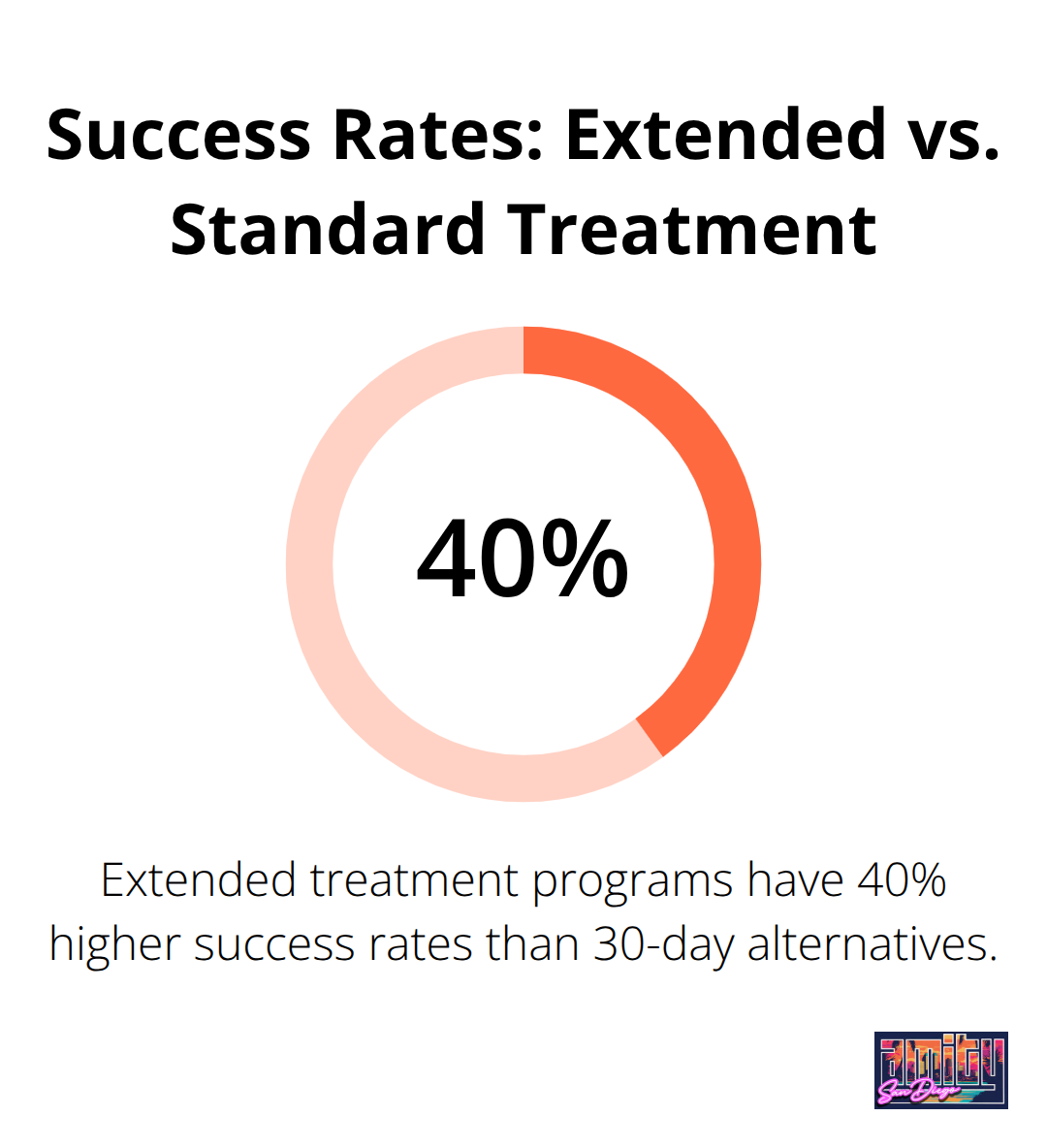
Chart comparing success rates of extended treatment programs (40% higher) to standard 30-day programs - 90 day alcohol treatment programs

The Science Behind Extended Recovery Time

Research from the Substance Abuse and Mental Health Services Administration shows that most people need at least 60-90 days just to stabilize physically and mentally after they stop alcohol use. The first 30 days focus primarily on detox and immediate medical needs. Real therapeutic work begins around day 45, when clients can fully engage in cognitive behavioral therapy, trauma processing, and skill development. Extended programs allow time for multiple therapy modalities (including EMDR, dialectical behavior therapy, and family counseling sessions) that shorter programs simply cannot accommodate.

Three Distinct Program Types Available

Residential 90-day programs provide 24/7 medical supervision and structured environments, ideal for severe alcohol dependence or multiple failed attempts at sobriety. Intensive outpatient programs offer 20-25 hours of weekly treatment while clients maintain work or family responsibilities. Partial hospitalization programs bridge the gap with 6-8 hours of daily treatment Monday through Friday. Each option includes medication-assisted treatment when appropriate, with naltrexone and acamprosate showing 60% better success rates when combined with extended counseling.

Financial Investment vs. Long-Term Value

The cost of 90-day programs ranges from $30,000 to $100,000 depending on location and amenities (with most insurance plans covering 60-80% of treatment costs). However, the National Institute on Alcohol Abuse and Alcoholism reports that in 2010, alcohol misuse cost the United States $249 billion. Extended treatment programs pay for themselves within the first year of sustained sobriety through reduced healthcare costs and increased earning potential.

These financial and clinical advantages make program selection even more important. The next step involves evaluating specific factors that separate high-quality programs from mediocre options, including specialized addiction treatment San Diego facilities.

What Should You Look for in a Quality Program

Accreditation separates legitimate treatment centers from substandard facilities that waste time and money. The Joint Commission has helped behavioral health organizations transform for more than 50 years. Programs must also hold state licenses and maintain current certifications for all clinical staff. Verify these credentials directly through state health department websites rather than trust facility marketing materials.
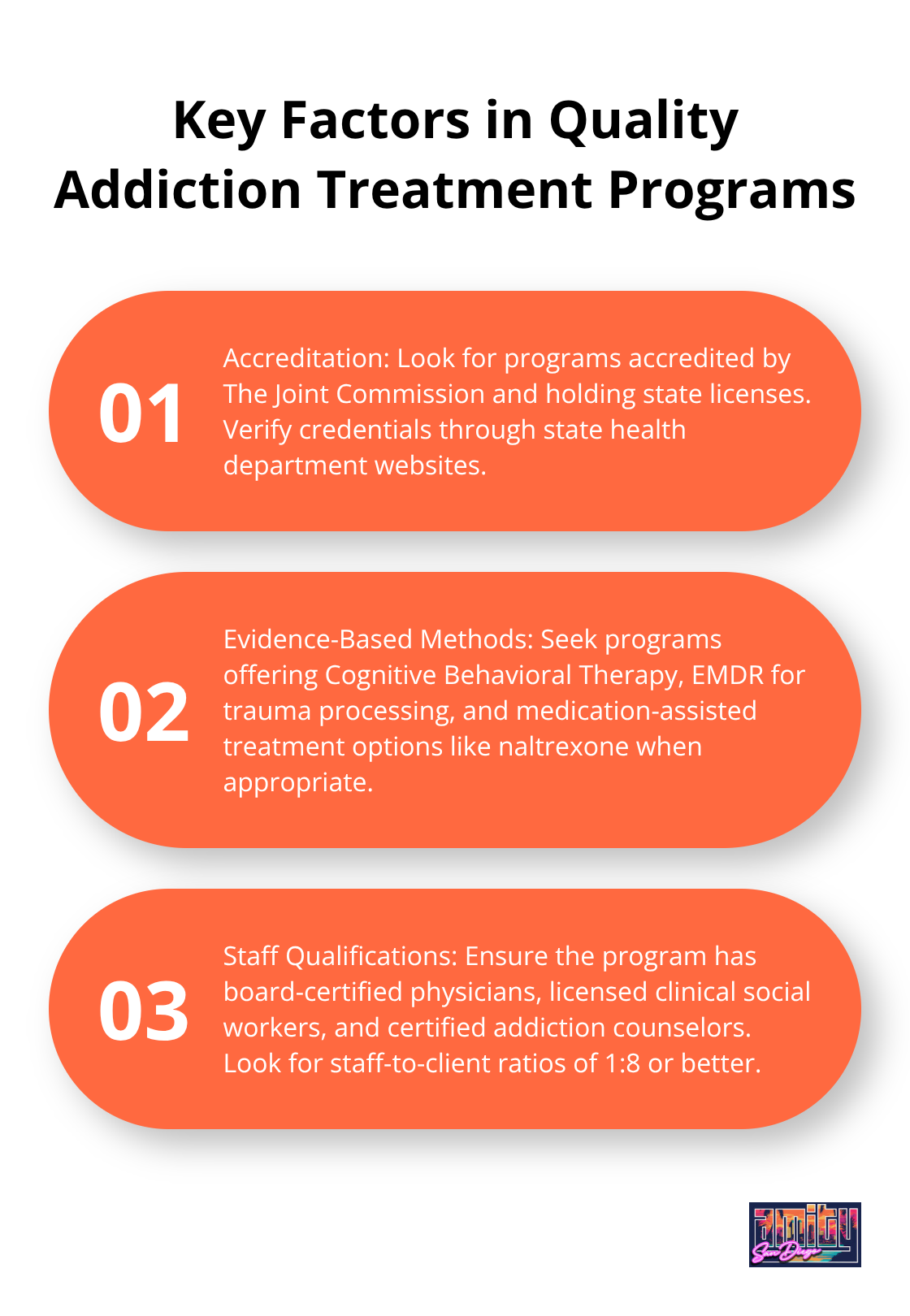
Ordered list of three key factors to look for in quality addiction treatment programs: accreditation, evidence-based methods, and staff qualifications

Evidence-Based Treatment Methods That Actually Work

Cognitive Behavioral Therapy shows success rates with 58% of patients faring better than those in comparison conditions. Programs should offer EMDR therapy for trauma processing, since many people with alcohol addiction have underlying trauma. Medication-assisted treatment options like naltrexone reduce alcohol cravings when combined with therapy. Avoid programs that rely heavily on 12-step meetings without clinical intervention or facilities that promise miracle cures through unproven methods.

Staff Qualifications and Treatment Ratios

Board-certified physicians, licensed clinical social workers, and certified addiction counselors should lead treatment teams at quality facilities. The best programs maintain staff-to-client ratios of 1:8 or better for group therapy sessions and provide individual therapy weekly. Staff members should hold current licenses in their respective fields and complete continuing education requirements annually. Programs with high staff turnover rates often indicate poor management and inconsistent care quality.

Insurance Coverage and Financial Planning

Most major insurance providers cover outpatient treatment costs under the Mental Health Parity Act, which prevents group health plans from discriminating against mental health and substance use disorder benefits. Request pre-authorization letters before enrollment and verify out-of-network benefits if your preferred facility doesn’t accept your insurance. Programs should provide detailed cost breakdowns that include therapy sessions, medication management, and aftercare services. Quality facilities offer payment plans and sliding scale fees, with some providing scholarships for those who demonstrate financial need.

These program quality indicators help narrow down options, but the facility environment and ongoing support services play equally important roles in long-term recovery success. For comprehensive addiction treatment San Diego residents can explore various accredited options.

How Do You Know If a Program Will Actually Work

The difference between recovery success and another failed attempt often comes down to three non-negotiable factors that most people overlook when they choose treatment. Programs with physician-to-patient ratios that are inadequate can impact treatment outcomes. Quality facilities maintain ratios of 1:8 or better for group sessions and assign dedicated case managers to each client.

Staff Credentials Matter More Than Marketing

Staff credentials matter more than fancy amenities – look for board-certified addiction psychiatrists, licensed clinical social workers with addiction specializations, and counselors who hold CADC or similar certifications. Programs that employ recent graduates or unlicensed staff as primary therapists typically produce poor outcomes regardless of their promises. The best facilities require continuing education for all clinical staff and maintain low turnover rates (under 20% annually).

Physical Environment Impacts Recovery Outcomes

The facility environment directly affects treatment success, but luxury amenities matter less than therapeutic infrastructure. Programs housed in medical spaces with proper clinical rooms, private therapy offices, and group areas designed for confidential discussions create better environments than resort-style facilities with pools and spas. Research shows that residential programs report a 65% completion rate compared to 52% for outpatient settings, demonstrating the importance of structured therapeutic environments.
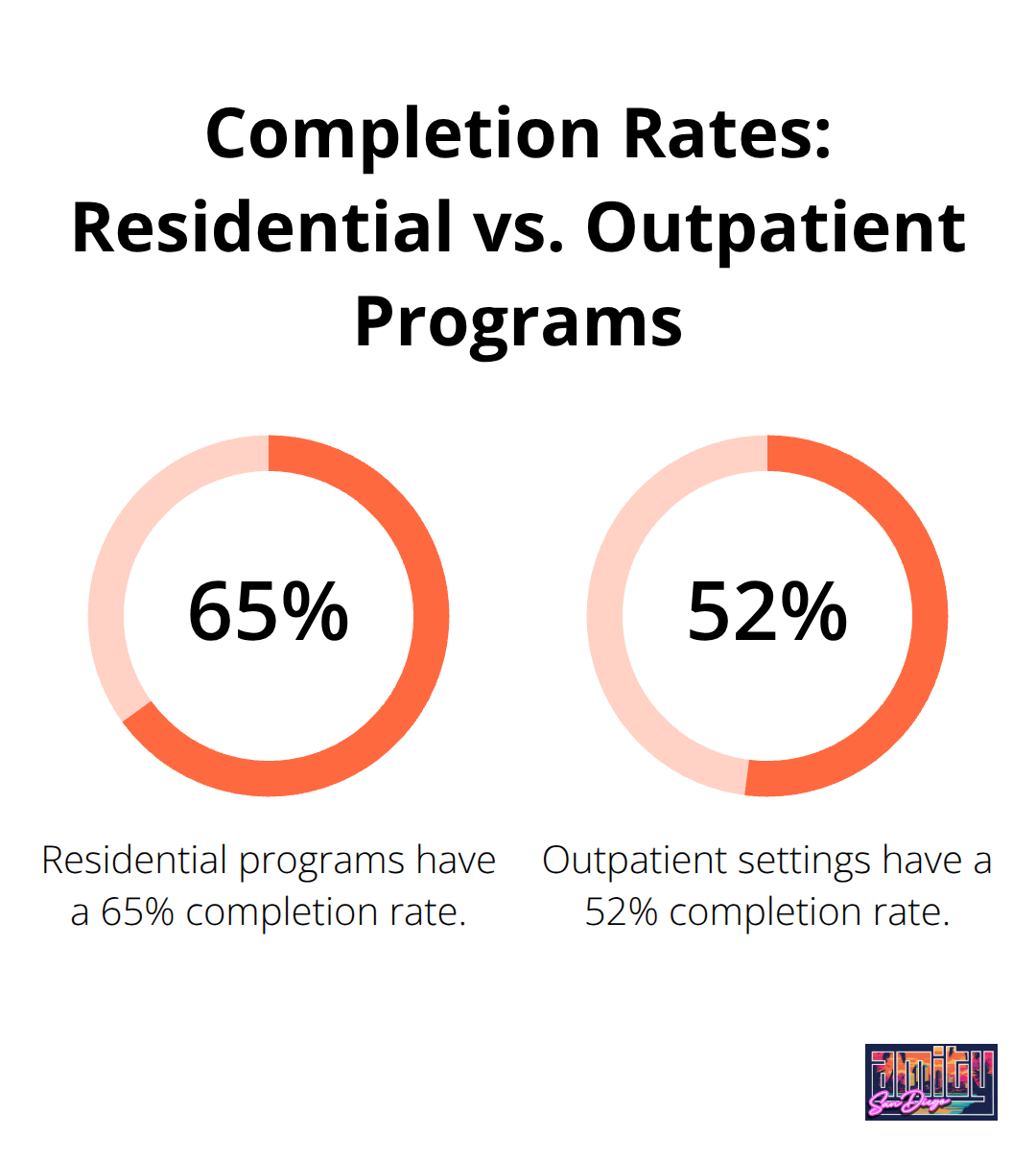
Chart comparing completion rates of residential programs (65%) to outpatient settings (52%) - 90 day alcohol treatment programs

Alumni Networks Predict Long-Term Success

Programs with active alumni networks and structured aftercare services produce significantly better long-term outcomes than those that end support at discharge. The best facilities offer monthly alumni meetings, career counseling, and crisis intervention services for graduates. Quality programs focus on measurable success through comprehensive aftercare support systems. Ask potential programs about their alumni engagement statistics and request contact information for recent graduates who can discuss their post-treatment experience.

Warning Signs of Substandard Programs

Programs that refuse alumni references or claim privacy concerns often lack meaningful alumni involvement, which correlates with higher relapse rates within the first year after treatment completion. Avoid facilities that guarantee success rates above 85% (industry average hovers around 40-60% for sustained sobriety). Red flags include programs that discourage family involvement, refuse to provide detailed treatment schedules, or push immediate enrollment without proper assessment periods. When evaluating options, consider long-term addiction treatment programs that offer comprehensive support beyond the initial treatment phase.

Final Thoughts

You must evaluate accreditation, staff qualifications, evidence-based therapies, and comprehensive aftercare support when you select the right 90-day alcohol treatment program. Programs with board-certified physicians, licensed clinical staff, and patient-to-staff ratios of 1:8 or better produce measurably better outcomes than facilities with inadequate staff or unproven methods. The investment in extended treatment pays dividends through reduced relapse rates and improved long-term recovery success.

Quality 90-day alcohol treatment programs combine medical supervision, cognitive behavioral therapy, trauma processing, and medication-assisted treatment when appropriate. Alumni networks and structured aftercare services separate programs that create permanent change from those that provide temporary stabilization. These factors determine whether someone achieves lasting sobriety or faces repeated relapses (with extended programs showing 40% higher success rates than shorter alternatives).

We at Amity San Diego provide comprehensive outpatient programs that address both immediate needs and long-term success factors. Our team offers Partial Hospitalization and Intensive Outpatient services with personalized, evidence-based care. Recovery becomes possible when you choose addiction treatment San Diego that transforms lives through clinical excellence and compassionate care.


Accessibility Toolbar

How to Choose the Best 90-Day Alcohol Treatment Program

Choosing the right 90-day alcohol treatment program can determine whether someone achieves lasting sobriety or faces repeated relapses. Research shows that extended treatment programs have 40% higher success rates than 30-day alternatives.

We at Amity San Diego understand that this decision affects not just the individual, but their entire family's future. The right program combines evidence-based therapies, qualified staff, and comprehensive aftercare support.

What Makes 90-Day Programs Worth the Investment

Ninety-day alcohol treatment programs transform recovery outcomes compared to standard 28-30 day options. The National Institute on Drug Abuse confirms that treatment episodes lasting 90 days or longer produce significantly better outcomes, with relapse rates for substance use disorders at 40-60%. This improvement occurs because the brain needs approximately 90 days to begin rewiring neural pathways that chronic alcohol use damages. Short-term programs barely address addiction's complex psychological and physical components.

Chart comparing success rates of extended treatment programs (40% higher) to standard 30-day programs - 90 day alcohol treatment programs

The Science Behind Extended Recovery Time

Research from the Substance Abuse and Mental Health Services Administration shows that most people need at least 60-90 days just to stabilize physically and mentally after they stop alcohol use. The first 30 days focus primarily on detox and immediate medical needs. Real therapeutic work begins around day 45, when clients can fully engage in cognitive behavioral therapy, trauma processing, and skill development. Extended programs allow time for multiple therapy modalities (including EMDR, dialectical behavior therapy, and family counseling sessions) that shorter programs simply cannot accommodate.

Three Distinct Program Types Available

Residential 90-day programs provide 24/7 medical supervision and structured environments, ideal for severe alcohol dependence or multiple failed attempts at sobriety. Intensive outpatient programs offer 20-25 hours of weekly treatment while clients maintain work or family responsibilities. Partial hospitalization programs bridge the gap with 6-8 hours of daily treatment Monday through Friday. Each option includes medication-assisted treatment when appropriate, with naltrexone and acamprosate showing 60% better success rates when combined with extended counseling.

Financial Investment vs. Long-Term Value

The cost of 90-day programs ranges from $30,000 to $100,000 depending on location and amenities (with most insurance plans covering 60-80% of treatment costs). However, the National Institute on Alcohol Abuse and Alcoholism reports that in 2010, alcohol misuse cost the United States $249 billion. Extended treatment programs pay for themselves within the first year of sustained sobriety through reduced healthcare costs and increased earning potential.

These financial and clinical advantages make program selection even more important. The next step involves evaluating specific factors that separate high-quality programs from mediocre options, including specialized addiction treatment San Diego facilities.

What Should You Look for in a Quality Program

Accreditation separates legitimate treatment centers from substandard facilities that waste time and money. The Joint Commission has helped behavioral health organizations transform for more than 50 years. Programs must also hold state licenses and maintain current certifications for all clinical staff. Verify these credentials directly through state health department websites rather than trust facility marketing materials.

Ordered list of three key factors to look for in quality addiction treatment programs: accreditation, evidence-based methods, and staff qualifications

Evidence-Based Treatment Methods That Actually Work

Cognitive Behavioral Therapy shows success rates with 58% of patients faring better than those in comparison conditions. Programs should offer EMDR therapy for trauma processing, since many people with alcohol addiction have underlying trauma. Medication-assisted treatment options like naltrexone reduce alcohol cravings when combined with therapy. Avoid programs that rely heavily on 12-step meetings without clinical intervention or facilities that promise miracle cures through unproven methods.

Staff Qualifications and Treatment Ratios

Board-certified physicians, licensed clinical social workers, and certified addiction counselors should lead treatment teams at quality facilities. The best programs maintain staff-to-client ratios of 1:8 or better for group therapy sessions and provide individual therapy weekly. Staff members should hold current licenses in their respective fields and complete continuing education requirements annually. Programs with high staff turnover rates often indicate poor management and inconsistent care quality.

Insurance Coverage and Financial Planning

Most major insurance providers cover outpatient treatment costs under the Mental Health Parity Act, which prevents group health plans from discriminating against mental health and substance use disorder benefits. Request pre-authorization letters before enrollment and verify out-of-network benefits if your preferred facility doesn't accept your insurance. Programs should provide detailed cost breakdowns that include therapy sessions, medication management, and aftercare services. Quality facilities offer payment plans and sliding scale fees, with some providing scholarships for those who demonstrate financial need.

These program quality indicators help narrow down options, but the facility environment and ongoing support services play equally important roles in long-term recovery success. For comprehensive addiction treatment San Diego residents can explore various accredited options.

How Do You Know If a Program Will Actually Work

The difference between recovery success and another failed attempt often comes down to three non-negotiable factors that most people overlook when they choose treatment. Programs with physician-to-patient ratios that are inadequate can impact treatment outcomes. Quality facilities maintain ratios of 1:8 or better for group sessions and assign dedicated case managers to each client.

Staff Credentials Matter More Than Marketing

Staff credentials matter more than fancy amenities - look for board-certified addiction psychiatrists, licensed clinical social workers with addiction specializations, and counselors who hold CADC or similar certifications. Programs that employ recent graduates or unlicensed staff as primary therapists typically produce poor outcomes regardless of their promises. The best facilities require continuing education for all clinical staff and maintain low turnover rates (under 20% annually).

Physical Environment Impacts Recovery Outcomes

The facility environment directly affects treatment success, but luxury amenities matter less than therapeutic infrastructure. Programs housed in medical spaces with proper clinical rooms, private therapy offices, and group areas designed for confidential discussions create better environments than resort-style facilities with pools and spas. Research shows that residential programs report a 65% completion rate compared to 52% for outpatient settings, demonstrating the importance of structured therapeutic environments.

Chart comparing completion rates of residential programs (65%) to outpatient settings (52%) - 90 day alcohol treatment programs

Alumni Networks Predict Long-Term Success

Programs with active alumni networks and structured aftercare services produce significantly better long-term outcomes than those that end support at discharge. The best facilities offer monthly alumni meetings, career counseling, and crisis intervention services for graduates. Quality programs focus on measurable success through comprehensive aftercare support systems. Ask potential programs about their alumni engagement statistics and request contact information for recent graduates who can discuss their post-treatment experience.

Warning Signs of Substandard Programs

Programs that refuse alumni references or claim privacy concerns often lack meaningful alumni involvement, which correlates with higher relapse rates within the first year after treatment completion. Avoid facilities that guarantee success rates above 85% (industry average hovers around 40-60% for sustained sobriety). Red flags include programs that discourage family involvement, refuse to provide detailed treatment schedules, or push immediate enrollment without proper assessment periods. When evaluating options, consider long-term addiction treatment programs that offer comprehensive support beyond the initial treatment phase.

Final Thoughts

You must evaluate accreditation, staff qualifications, evidence-based therapies, and comprehensive aftercare support when you select the right 90-day alcohol treatment program. Programs with board-certified physicians, licensed clinical staff, and patient-to-staff ratios of 1:8 or better produce measurably better outcomes than facilities with inadequate staff or unproven methods. The investment in extended treatment pays dividends through reduced relapse rates and improved long-term recovery success.

Quality 90-day alcohol treatment programs combine medical supervision, cognitive behavioral therapy, trauma processing, and medication-assisted treatment when appropriate. Alumni networks and structured aftercare services separate programs that create permanent change from those that provide temporary stabilization. These factors determine whether someone achieves lasting sobriety or faces repeated relapses (with extended programs showing 40% higher success rates than shorter alternatives).

We at Amity San Diego provide comprehensive outpatient programs that address both immediate needs and long-term success factors. Our team offers Partial Hospitalization and Intensive Outpatient services with personalized, evidence-based care. Recovery becomes possible when you choose addiction treatment San Diego that transforms lives through clinical excellence and compassionate care.

Table of Contents