How to Choose Effective BPD Treatment Programs

Borderline Personality Disorder affects 1.4% of adults in the United States, yet finding quality care remains challenging for many families.
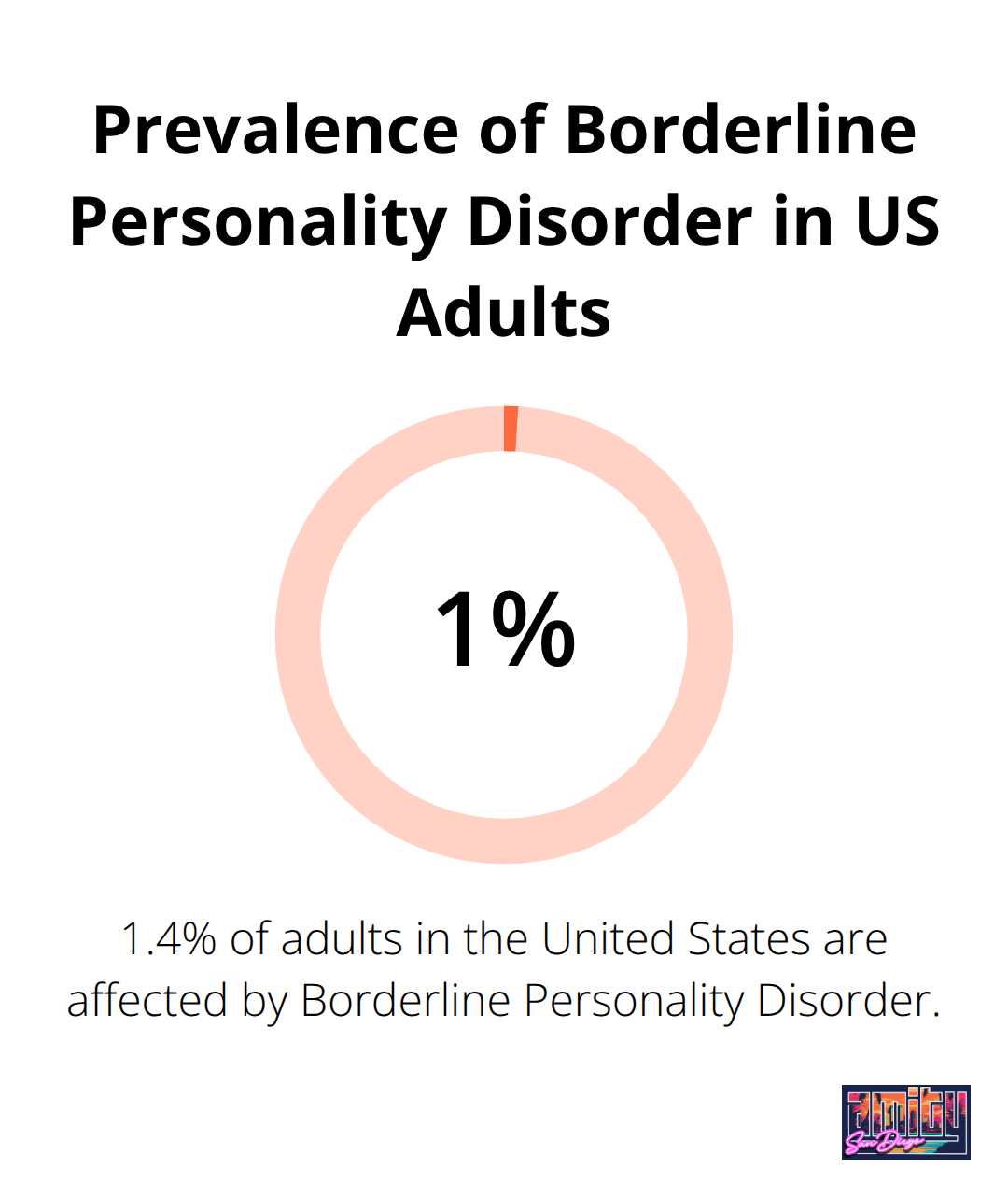
Pie chart showing 1.4% of US adults affected by Borderline Personality Disorder

Treatment programs for BPD vary significantly in their approaches, staff expertise, and success rates. We at Amity San Diego understand that selecting the right program can feel overwhelming when you’re already managing complex symptoms and emotional distress.

The wrong choice can delay recovery and waste valuable resources.

What Treatment Methods Actually Work for BPD?

Dialectical Behavior Therapy: The Research-Backed Leader

Dialectical Behavior Therapy stands as the gold standard for BPD treatment. Research from Marsha Linehan demonstrates lower dropout rates from treatment and significant decreases in hospital stays. DBT combines individual therapy with skills groups, and targets emotion regulation, distress tolerance, interpersonal effectiveness, and mindfulness. The four-module approach typically runs 12-24 months, with studies showing improved outcomes for BPD patients after treatment completion.

Cognitive Behavioral Therapy: A Focused Alternative

Cognitive Behavioral Therapy offers a shorter-term alternative, typically lasting 12-20 sessions. CBT targets the distorted thought patterns that fuel BPD symptoms. This approach shows particular strength in reducing depression and anxiety symptoms, with effective treatment for reducing symptoms and enhancing functional outcomes according to recent clinical trials. Many patients prefer CBT’s structured format and clear timeline.

Medication Support: Complementary Treatment Options

Medication-assisted approaches complement therapy rather than replace it. Mood stabilizers like lamotrigine show promise in managing emotional instability (though no medications receive FDA approval specifically for BPD). The American Psychiatric Association notes that targeted pharmacotherapy for co-occurring conditions like depression or anxiety can significantly improve treatment outcomes. Programs that integrate these approaches often provide comprehensive care for complex cases.

When you evaluate treatment programs, you’ll want to examine how they implement these evidence-based methods and whether their staff holds proper certifications in these specialized approaches. For those seeking specialized care, consider exploring addiction treatment San Diego options that incorporate these therapeutic modalities.

What Makes a BPD Treatment Program Worth Your Investment?

Staff Credentials That Actually Matter

The difference between effective BPD treatment and wasted time often comes down to staff qualifications. Look for programs where therapists hold specific DBT certifications from the Linehan Institute or equivalent organizations. These certifications require therapists to complete comprehensive training including reading the Skills Training Manual for Treating Borderline Personality Disorder.

Ask directly about each clinician’s specialized BPD hours – quality programs require minimum 40-hour intensive courses plus consultation. Generic therapy approaches consistently fail BPD patients without proper specialized training.
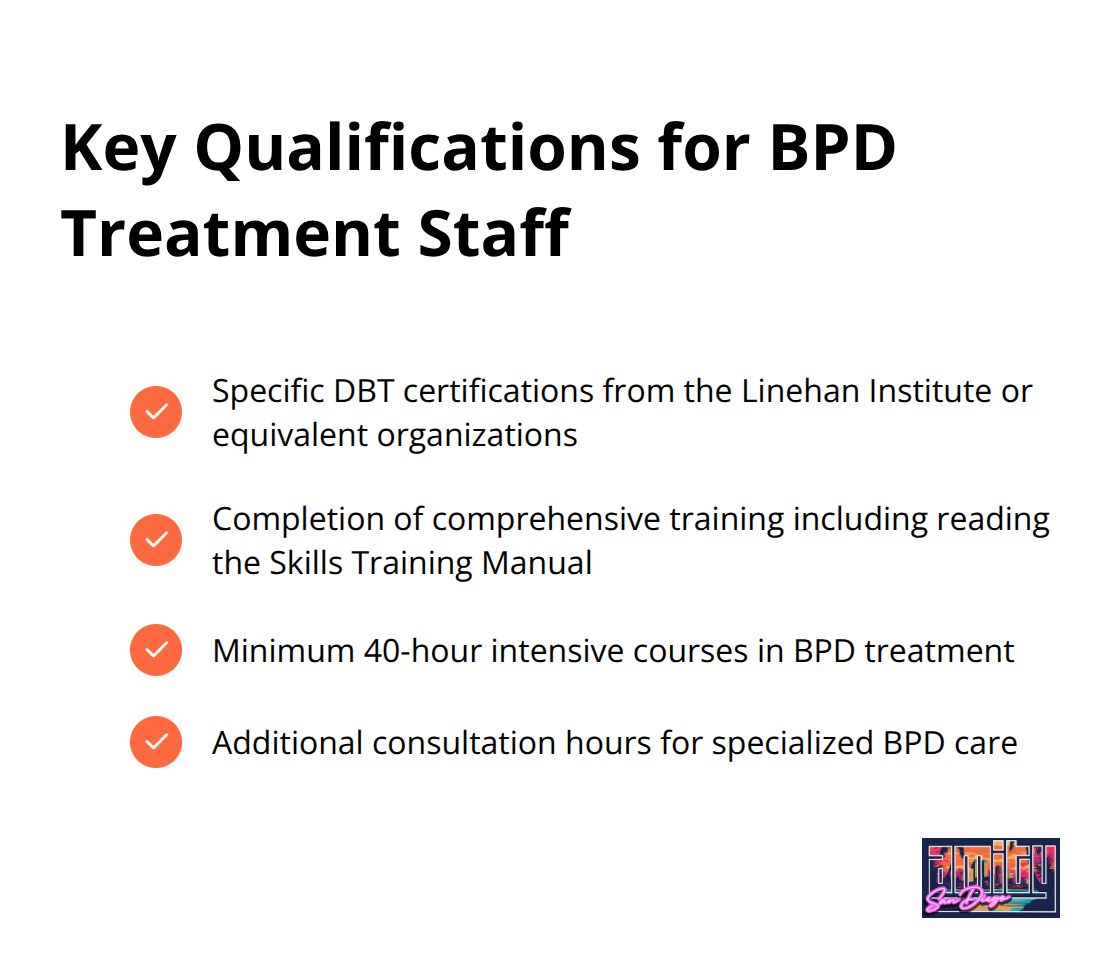
Checklist of essential qualifications for staff in BPD treatment programs - treatment programs for bpd

Treatment Environment Standards You Should Demand

Physical environment directly impacts BPD treatment success. Programs in clinical hospital settings often increase patient anxiety, while overly casual environments lack necessary structure. The most effective programs operate in professional outpatient facilities with dedicated group therapy rooms, private spaces for individual sessions, and calm areas.

Research demonstrates that patients in structured outpatient environments show improved outcomes compared to traditional inpatient settings. This data supports the outpatient model’s effectiveness for BPD recovery.

Insurance Coverage and Financial Planning

Insurance coverage varies dramatically between providers and treatment types. Verify your plan covers intensive outpatient programs before enrollment. Most major insurers now cover evidence-based treatments for borderline personality disorder, with providers like Aetna offering comprehensive coverage from a whole-person perspective.

Private pay options often provide more flexibility in treatment duration and intensity. Some facilities offer payment plans or sliding scale fees based on income verification. For comprehensive addiction treatment San Diego programs, exploring all coverage options ensures access to quality care.

These factors form the foundation of quality BPD care, but certain warning signs can help you identify programs that may actually harm your recovery progress.

What Warning Signs Should You Avoid When Choosing BPD Treatment?

Programs Without Evidence-Based Methods

Treatment centers that skip proven approaches represent the biggest risk to your recovery. Facilities that offer generic counseling or unproven experimental methods consistently produce poor outcomes. Research shows that none of the treatments has a very robust evidence base for BPD, making it crucial to choose programs with the strongest available research support.

Programs should explicitly state their use of DBT, Schema Therapy, or Mentalization-Based Treatment. Ask directly about their treatment protocols – legitimate facilities provide detailed written descriptions of their methods. Centers that cannot explain their approach or rely on vague terms like “holistic healing” without specific therapeutic frameworks waste your time and money.

High Staff Turnover Rates

Staff turnover rates indicate systemic problems that directly impact your care. Research emphasizes the importance of therapeutic relationship within the first week of treatment for therapy dropout rates in DBT. Programs with staff rotation cannot provide this crucial continuity.

Watch for facilities where reception staff cannot answer basic questions about treatment approaches or where therapists seem unfamiliar with your case history. Quality programs maintain detailed records and seamless communication between team members.

Communication Breakdowns Between Staff

Centers that schedule frequent staff changes or cannot provide consistent contact with your primary therapist create instability that worsens BPD symptoms. Poor communication systems often signal deeper organizational problems that affect treatment quality.

Staff members should know your treatment goals and progress without you having to repeat information at each appointment. Programs that lack proper documentation systems or fail to coordinate care between providers compromise your recovery outcomes.

Unrealistic Recovery Promises

Unrealistic promises about rapid recovery timelines signal problematic programs. Legitimate facilities acknowledge that meaningful BPD improvement typically requires 18-36 months of consistent work based on patient recovery experiences. Centers that guarantee quick fixes or promise complete symptom elimination within weeks exploit vulnerable patients.

Quality programs provide realistic timelines based on clinical evidence rather than marketing claims designed to attract desperate families. For comprehensive addiction treatment San Diego options, research facilities that combine evidence-based approaches with realistic expectations.
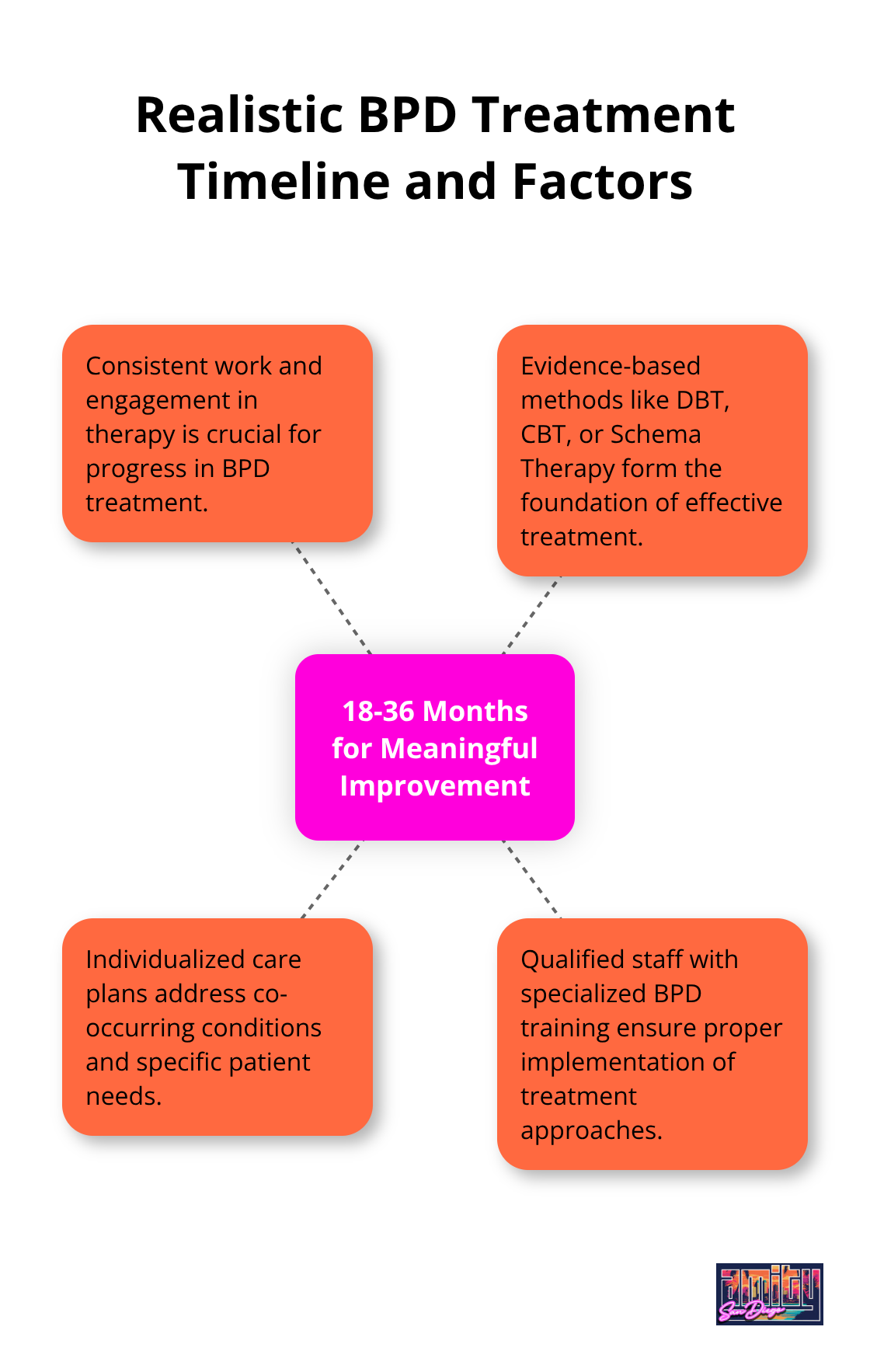
Hub and spoke diagram showing the 18-36 month timeline for BPD improvement and related factors - treatment programs for bpd

Final Thoughts

Effective treatment programs for BPD require evidence-based methods, qualified staff, and realistic timelines. Programs that offer DBT, CBT, or Schema Therapy with certified clinicians provide the strongest foundation for recovery. You should avoid facilities with high staff turnover, poor communication, or unrealistic promises about rapid improvement.

Your treatment choice should reflect your specific needs, insurance coverage, and personal preferences. Some patients thrive in intensive outpatient settings, while others benefit from longer-term approaches (typically 18-36 months for meaningful progress). The most successful programs combine proven therapeutic methods with individualized care plans that address co-occurring conditions.

We at Amity San Diego provide evidence-based care in a structured outpatient environment. Start by contacting facilities that meet these essential criteria, verify your insurance coverage, and schedule consultations to find the best fit for your recovery. Quality addiction treatment San Diego combines clinical excellence with personalized care to support your path forward.


Accessibility Toolbar

How to Choose Effective BPD Treatment Programs

Borderline Personality Disorder affects 1.4% of adults in the United States, yet finding quality care remains challenging for many families.

Pie chart showing 1.4% of US adults affected by Borderline Personality Disorder

Treatment programs for BPD vary significantly in their approaches, staff expertise, and success rates. We at Amity San Diego understand that selecting the right program can feel overwhelming when you're already managing complex symptoms and emotional distress.

The wrong choice can delay recovery and waste valuable resources.

What Treatment Methods Actually Work for BPD?

Dialectical Behavior Therapy: The Research-Backed Leader

Dialectical Behavior Therapy stands as the gold standard for BPD treatment. Research from Marsha Linehan demonstrates lower dropout rates from treatment and significant decreases in hospital stays. DBT combines individual therapy with skills groups, and targets emotion regulation, distress tolerance, interpersonal effectiveness, and mindfulness. The four-module approach typically runs 12-24 months, with studies showing improved outcomes for BPD patients after treatment completion.

Cognitive Behavioral Therapy: A Focused Alternative

Cognitive Behavioral Therapy offers a shorter-term alternative, typically lasting 12-20 sessions. CBT targets the distorted thought patterns that fuel BPD symptoms. This approach shows particular strength in reducing depression and anxiety symptoms, with effective treatment for reducing symptoms and enhancing functional outcomes according to recent clinical trials. Many patients prefer CBT's structured format and clear timeline.

Medication Support: Complementary Treatment Options

Medication-assisted approaches complement therapy rather than replace it. Mood stabilizers like lamotrigine show promise in managing emotional instability (though no medications receive FDA approval specifically for BPD). The American Psychiatric Association notes that targeted pharmacotherapy for co-occurring conditions like depression or anxiety can significantly improve treatment outcomes. Programs that integrate these approaches often provide comprehensive care for complex cases.

When you evaluate treatment programs, you'll want to examine how they implement these evidence-based methods and whether their staff holds proper certifications in these specialized approaches. For those seeking specialized care, consider exploring addiction treatment San Diego options that incorporate these therapeutic modalities.

What Makes a BPD Treatment Program Worth Your Investment?

Staff Credentials That Actually Matter

The difference between effective BPD treatment and wasted time often comes down to staff qualifications. Look for programs where therapists hold specific DBT certifications from the Linehan Institute or equivalent organizations. These certifications require therapists to complete comprehensive training including reading the Skills Training Manual for Treating Borderline Personality Disorder.

Ask directly about each clinician's specialized BPD hours - quality programs require minimum 40-hour intensive courses plus consultation. Generic therapy approaches consistently fail BPD patients without proper specialized training.

Checklist of essential qualifications for staff in BPD treatment programs - treatment programs for bpd

Treatment Environment Standards You Should Demand

Physical environment directly impacts BPD treatment success. Programs in clinical hospital settings often increase patient anxiety, while overly casual environments lack necessary structure. The most effective programs operate in professional outpatient facilities with dedicated group therapy rooms, private spaces for individual sessions, and calm areas.

Research demonstrates that patients in structured outpatient environments show improved outcomes compared to traditional inpatient settings. This data supports the outpatient model's effectiveness for BPD recovery.

Insurance Coverage and Financial Planning

Insurance coverage varies dramatically between providers and treatment types. Verify your plan covers intensive outpatient programs before enrollment. Most major insurers now cover evidence-based treatments for borderline personality disorder, with providers like Aetna offering comprehensive coverage from a whole-person perspective.

Private pay options often provide more flexibility in treatment duration and intensity. Some facilities offer payment plans or sliding scale fees based on income verification. For comprehensive addiction treatment San Diego programs, exploring all coverage options ensures access to quality care.

These factors form the foundation of quality BPD care, but certain warning signs can help you identify programs that may actually harm your recovery progress.

What Warning Signs Should You Avoid When Choosing BPD Treatment?

Programs Without Evidence-Based Methods

Treatment centers that skip proven approaches represent the biggest risk to your recovery. Facilities that offer generic counseling or unproven experimental methods consistently produce poor outcomes. Research shows that none of the treatments has a very robust evidence base for BPD, making it crucial to choose programs with the strongest available research support.

Programs should explicitly state their use of DBT, Schema Therapy, or Mentalization-Based Treatment. Ask directly about their treatment protocols - legitimate facilities provide detailed written descriptions of their methods. Centers that cannot explain their approach or rely on vague terms like "holistic healing" without specific therapeutic frameworks waste your time and money.

High Staff Turnover Rates

Staff turnover rates indicate systemic problems that directly impact your care. Research emphasizes the importance of therapeutic relationship within the first week of treatment for therapy dropout rates in DBT. Programs with staff rotation cannot provide this crucial continuity.

Watch for facilities where reception staff cannot answer basic questions about treatment approaches or where therapists seem unfamiliar with your case history. Quality programs maintain detailed records and seamless communication between team members.

Communication Breakdowns Between Staff

Centers that schedule frequent staff changes or cannot provide consistent contact with your primary therapist create instability that worsens BPD symptoms. Poor communication systems often signal deeper organizational problems that affect treatment quality.

Staff members should know your treatment goals and progress without you having to repeat information at each appointment. Programs that lack proper documentation systems or fail to coordinate care between providers compromise your recovery outcomes.

Unrealistic Recovery Promises

Unrealistic promises about rapid recovery timelines signal problematic programs. Legitimate facilities acknowledge that meaningful BPD improvement typically requires 18-36 months of consistent work based on patient recovery experiences. Centers that guarantee quick fixes or promise complete symptom elimination within weeks exploit vulnerable patients.

Quality programs provide realistic timelines based on clinical evidence rather than marketing claims designed to attract desperate families. For comprehensive addiction treatment San Diego options, research facilities that combine evidence-based approaches with realistic expectations.

Hub and spoke diagram showing the 18-36 month timeline for BPD improvement and related factors - treatment programs for bpd

Final Thoughts

Effective treatment programs for BPD require evidence-based methods, qualified staff, and realistic timelines. Programs that offer DBT, CBT, or Schema Therapy with certified clinicians provide the strongest foundation for recovery. You should avoid facilities with high staff turnover, poor communication, or unrealistic promises about rapid improvement.

Your treatment choice should reflect your specific needs, insurance coverage, and personal preferences. Some patients thrive in intensive outpatient settings, while others benefit from longer-term approaches (typically 18-36 months for meaningful progress). The most successful programs combine proven therapeutic methods with individualized care plans that address co-occurring conditions.

We at Amity San Diego provide evidence-based care in a structured outpatient environment. Start by contacting facilities that meet these essential criteria, verify your insurance coverage, and schedule consultations to find the best fit for your recovery. Quality addiction treatment San Diego combines clinical excellence with personalized care to support your path forward.
Table of Contents