
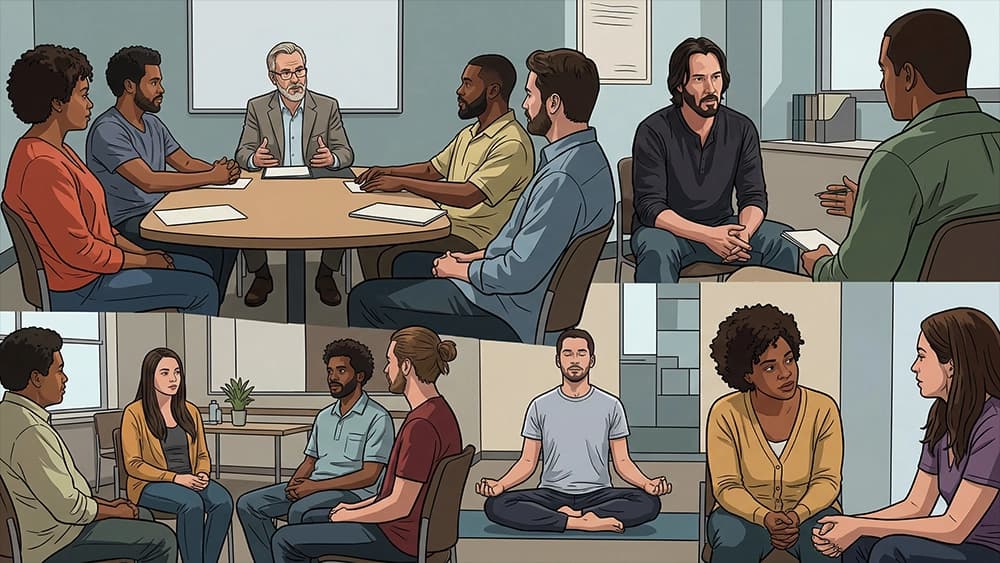
Outpatient programs help prevent relapse by combining accountability, therapy, skill-building, and real-world recovery practice. They are often most effective when people need structured support but are stable enough to live outside a residential setting.
- 1Relapse prevention works better when people practice recovery skills in everyday life while still receiving treatment support.
- 2Outpatient care provides structure without removing someone from work, school, or family life entirely.
- 3IOP and standard outpatient programs can support different stages of stability and step-down planning.
- 4Accountability, trigger review, and routine check-ins often reduce return-to-use risk.
- 5Alcohol and other substance-specific treatment planning can still be part of outpatient care.
Relapse prevention is not only about telling people to avoid triggers. It is about giving them enough support, structure, and practice to respond differently when triggers show up. That is where outpatient treatment can make a major difference. It allows people to build recovery skills while they are still navigating work, family, transportation, and stress in real time.
In San Diego, outpatient programs are often part of the bridge between early recovery and long-term stability.
For many people, that bridge has to fit real life instead of replacing it. Outpatient care works best when the recovery plan can live alongside work schedules, parenting, appointments, and basic responsibilities. The goal is not to create a perfect bubble. It is to make the next healthy choice easier to follow through on.

Why practice in real life matters
Recovery skills tend to become more durable when people use them in the environments that challenge them most. Outpatient care gives people a place to process cravings, routines, conflict, and setbacks while they are still happening rather than waiting until the problem has already escalated.
That is one of the reasons relapse prevention is often stronger in well-structured outpatient care than in a plan that relies only on willpower after discharge.
A person may learn a coping skill in session, then use it the same afternoon when a conflict, craving, or bad mood shows up. That immediate testing is what makes outpatient care so useful after residential treatment or as a first step when someone is stable enough for less supervision.
How structure lowers return-to-use risk
Outpatient treatment adds accountability to everyday life. People show up for sessions, review triggers, work on coping strategies, and stay connected to clinicians or peers who can recognize changes early. That structure can make it easier to catch warning signs like isolation, skipped appointments, rising anxiety, or a return to old social patterns.
For some people, IOP is the right fit because it offers more hours and more clinical contact each week. Others step into outpatient care after a more intensive phase and use it to maintain momentum while daily independence increases. Understanding the key differences between IOP and standard outpatient therapy can help families choose between them.
That structure also creates a place to bring up subtle changes before they become larger problems. Missing one session, sleeping badly, feeling more irritable, or withdrawing from sober peers may not look dramatic, but those patterns often appear before a return to use. Outpatient care gives those changes somewhere to go before they build pressure.
What relapse prevention work usually includes
Good outpatient relapse prevention is practical. It often includes identifying triggers, building alternate routines, learning how to respond to cravings, improving communication, and creating a written plan for high-risk moments. Programs may also address sleep, mental health symptoms, transportation issues, and other factors that quietly increase relapse risk.
This is especially important when alcohol treatment is part of the picture. Many people do not relapse because they “forgot” recovery tools. They relapse because stress, isolation, untreated symptoms, or overconfidence gradually erode the plan.
The best plans usually include one or two action steps for each trigger instead of a long list of vague advice. For example, if evenings are hard, the plan might say to leave work on time, eat dinner, attend a meeting, and avoid being alone with no structure. Simple plans are often the ones people actually use when they are tired or overwhelmed.
Why step-down care still needs intention
People sometimes assume that needing outpatient support means recovery is weak. In reality, outpatient care is often where long-term recovery gets practiced enough to become sustainable. It helps people move from high structure into a life that still has support, accountability, and a place to course-correct.
That makes outpatient treatment a useful level of care not just during early recovery, but during the transition into more independent living.
Step-down care is not a sign that treatment failed. It is the part of recovery where people practice independence with enough support to course-correct. That balance is often what makes sobriety more realistic over the long term.
When outpatient care needs to intensify
Sometimes outpatient support shows that a person actually needs more structure. If cravings are getting stronger, sessions are being missed, or mental health symptoms are taking over, the safest move may be to step back into IOP or another higher level of care rather than trying to force progress.
Common warning signs include:
- Repeated missed appointments or late cancellations
- More time with people or places tied to old use
- Poor sleep, higher anxiety, or more irritability
- Family members noticing isolation or secrecy
- Thinking about use as a way to "take the edge off"
Catching those patterns early can prevent a small drift from turning into a larger setback.
If someone needs more structure, that does not mean they failed. It may mean the care plan needs to be adjusted with more frequent sessions, stronger family involvement, or a temporary return to IOP while life becomes more stable again.
The best outpatient plans are honest about what is working and what is not. A plan that is too light can quietly fail, but a plan that is a little more intensive than necessary is often safer than waiting for a relapse to prove the point.
Programs can also use that step-up moment to reset sleep, nutrition, support meetings, and coping skills before asking someone to carry more independence again. That is often what turns a rough patch into a manageable course correction instead of a full setback.
When families are involved, the transition is smoother if everyone agrees on what a warning sign looks like. One person may need help getting to session, another may need quieter evenings, and another may need firmer boundaries around old contacts. Those are simple adjustments, but they reduce friction fast.
It also helps to name one person responsible for the next check-in, whether that is a clinician, sponsor, or family member. Support works better when it is active instead of assumed, especially during weeks when motivation is uneven.
Finding outpatient support in San Diego
If you are trying to build a stronger relapse prevention plan, outpatient treatment may be the right place to start or continue. A clinical conversation can help determine whether IOP, standard outpatient care, or another level of support fits best right now.
Call Amity San Diego at (888) 666-4405 to talk through outpatient options, relapse prevention planning, and what kind of structure would be most helpful.
Related care paths
Frequently Asked Questions
How does outpatient care help prevent relapse?
Outpatient programs help people identify triggers, practice coping skills, stay accountable, and adjust their recovery plan while they are still living in the real situations that can challenge sobriety.
What is the difference between IOP and standard outpatient treatment?
IOP usually involves more hours and more structure each week, while standard outpatient care is less intensive and often used as a later step-down level of support.
Who is a good fit for outpatient relapse prevention support?
Outpatient care may fit people who are medically stable, can attend consistently, and do not need 24-hour supervision.
Can outpatient programs still treat alcohol use disorder seriously?
Yes. Outpatient treatment can include therapy, medication management referrals, relapse prevention planning, and alcohol treatment support.
How do I start in San Diego?
Call Amity San Diego at (888) 666-4405 to ask about IOP, outpatient care, and alcohol treatment.
Sources & References
This article is based on peer-reviewed research and authoritative medical sources.
- Continuing Care and Recovery Support for Substance Use Disorders — NCBI Bookshelf (2024)
- Recovery and Recovery Support — SAMHSA (2025)
- Principles of Drug Addiction Treatment: A Research-Based Guide — NIDA (2018)
Amity San Diego
Amity San Diego Medical Team